
1. Principles that apply almost everywhere
Regardless of the country, courts and data protection laws usually require four things: the monitored device belongs to the company, the purpose is work-related and concrete, employees are informed, and the measure is proportionate. Covert surveillance of workers is prohibited or high-risk practically everywhere.
The distinction between company and personal devices also repeats. Viewing a work PC for business purposes can be legitimate; monitoring an employee’s personal phone or computer almost never is. Always limit the scope to company-managed devices and working hours.
2. Overview of Latin America
Mexico: the Federal Data Protection Law (LFPDPPP) requires informing individuals about the processing of their data. In practice, monitoring company devices rests on the employment relationship and on clear, communicated internal policies. Colombia: Law 1581 of 2012 regulates the processing of personal data and requires an informed purpose; labour case law permits controls on company devices when they are transparent and proportionate.
Argentina: Law 25.326 (data protection) and labour principles require lawfulness and reasonableness; the constitution protects the privacy of communications, so monitoring must remain limited to the work sphere. Chile: Law 19.628 on the protection of private life applies similar principles, and the Labour Directorate has stated that controls must be general, announced and respectful of workers’ dignity. Across all these countries the pattern repeats: company device, work purpose, prior information, proportionality.
3. And in Europe? The GDPR in brief
If your company operates in the European Union, the General Data Protection Regulation (GDPR) applies. The principles are the same – purpose limitation, data minimisation, information – but with stricter formal duties: a documented legal basis, possibly an impact assessment and, in countries like Germany, works council co-determination.
Employee consent is rarely the appropriate basis in an employment relationship because of the dependency involved. For Europe, have the deployment reviewed by a privacy advisor before starting.
4. Informing the team: the step that is never missing
In every country reviewed, prior information is the most constant requirement. Write a short, understandable policy: what is visible, for what purpose, who has access and how long information is retained. Share it in writing and keep the acknowledgement of receipt.
Transparency is not only a legal duty: it also changes how the team perceives the tool. People who know the framework understand the screen overview as a work tool rather than covert surveillance.
5. Keeping the scope proportionate
Proportionality means: no more visibility than the purpose requires. If you want to check the availability of a support team, live view is usually sufficient; a permanent screenshot history is an additional storage decision that must be justified separately.
Also limit access: only people who need the view for their role should have it. And define times: monitoring outside working hours or during private breaks is hard to justify in any country.
6. Practical steps before deploying Wolfeye
First: document the concrete purpose in writing. Second: verify your country’s requirements with a local labour or data protection lawyer. Third: draft and communicate the internal policy. Fourth: install the software only on the company’s managed Windows PCs. Fifth: define access, times and deletion rules.
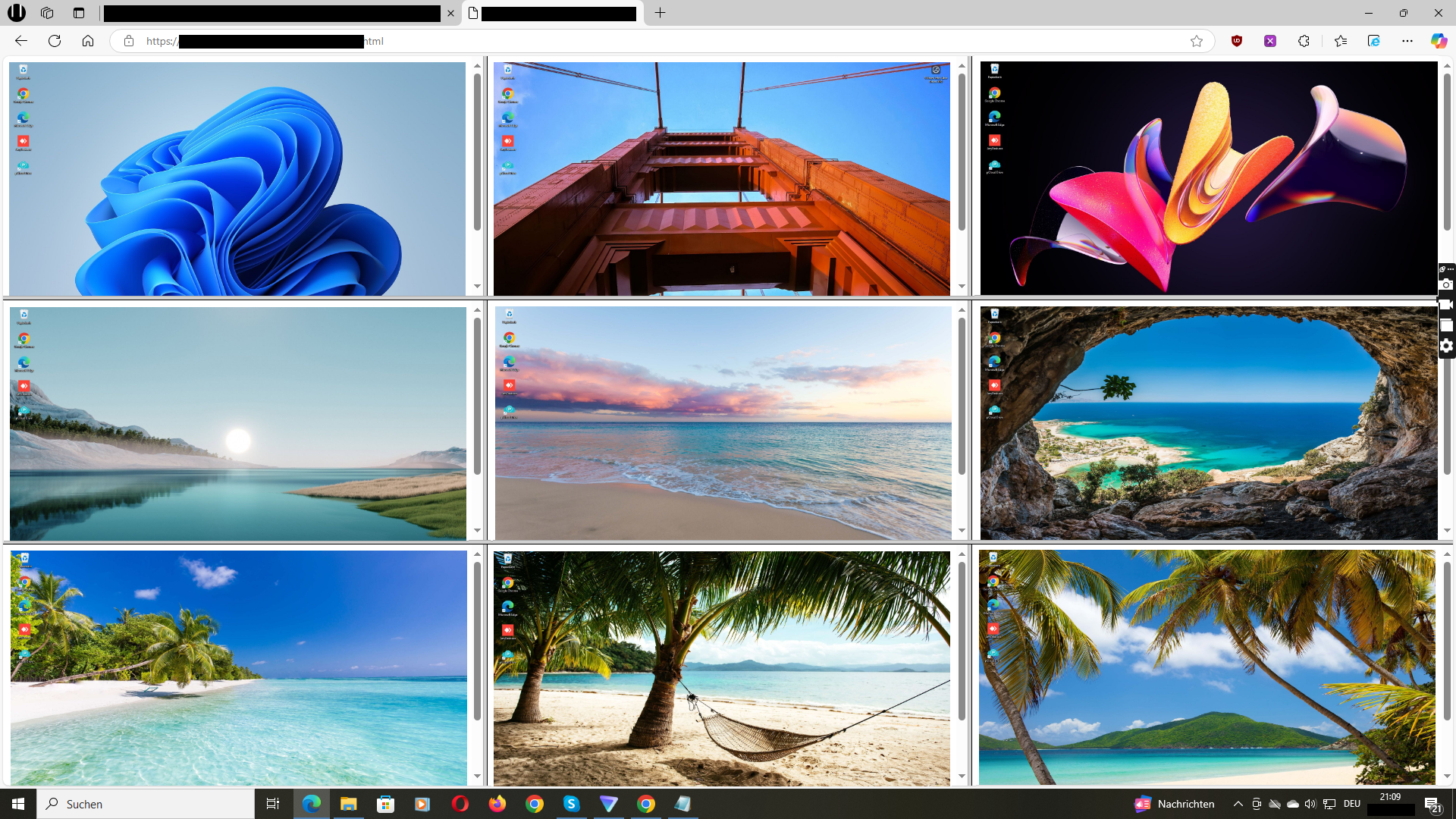
Wolfeye displays the screens of the company’s Windows PCs together in a browser; its product description says the view refreshes every few seconds. It is a screen overview, not remote control and not automatic performance scoring. You can see how it works in the online demo before deciding.
Your legal checklist before starting
- Is the concrete work purpose documented in writing?
- Has a local lawyer reviewed your country’s requirements?
- Has the team received and acknowledged a written policy?
- Are only company PCs included, only during working hours?
- Are access rights and deletion rules defined?
- Is any screenshot storage separately justified?
Common questions about legality
Can I view my employees’ screens without telling them?
In the vast majority of countries: no. Prior information is the most constant requirement in data protection laws and labour case law. Covert surveillance exposes the company to sanctions and can make any evidence obtained inadmissible.
Do I need each employee’s consent?
It depends on the country. In many labour law systems, prior information and a clear internal policy are sufficient, because consent in an employment relationship is not freely given. In the EU, consent is rarely the appropriate basis. Have the correct basis confirmed locally.
Can I monitor an employee’s personal phone or PC?
That is neither the purpose of this guide nor generally proportionate. The deployment described here concerns company-managed Windows PCs. Personal devices belong to the employee’s private sphere.
Is it legal to record screenshots permanently?
That is an additional storage decision. A purpose must exist that justifies it, and access, retention and deletion must be defined. For many cases, live view without history is sufficient.
Does this guide replace legal advice?
No. It summarises general principles and names laws of several countries, but it does not review your specific case. Before deploying monitoring, consult a labour or data protection lawyer in your country.
Do I need to install anything for the online demo?
No. The link opens a sample overview in your browser. Seeing your own Windows PCs requires a separate setup. Contact the developer for a personal trial.