Step-by-Step: How to Monitor Employee Computer Screens Live on Company PCs (Technical Guide, No Legal Advice)
A practical, non-legal step-by-step guide for SMB owners, managers and IT admins: how to technically set up live screen monitoring on company-controlled Windows PCs with Wolfeye Remote Screen – always subject to the laws and regulations that apply in your country and use case.
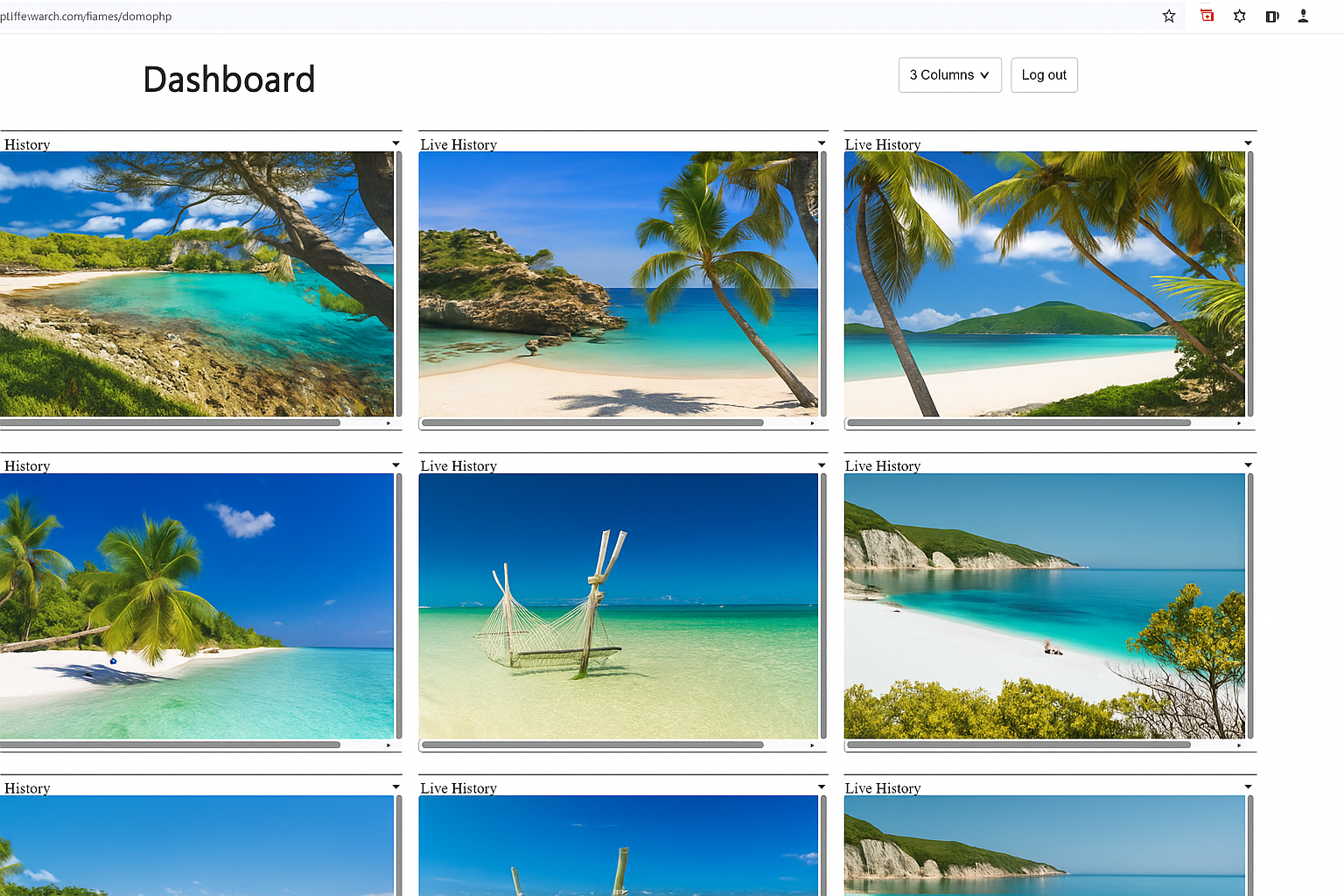
Illustrative Wolfeye dashboard showing several company-controlled PCs at once. Image for technical illustration only; any real use of monitoring must comply with the applicable laws and regulations.
Many business owners and IT admins search for exactly this question:
“How can I monitor employee computer screens live on company PCs, step by step?”
This article answers that question from a purely technical and organisational perspective. It explains how you can set up live screen monitoring on company-controlled Windows PCs with Wolfeye Remote Screen, how to connect the PCs to a dashboard and how to work with live views in everyday operations.
At the same time, screen and employee monitoring is always a legally sensitive topic. Whether you may use software like Wolfeye at all, for which purposes (for example, supervision of training, quality assurance or security) and under which conditions (for example, prior information of employees, explicit consent, internal agreements) depends on the laws and regulations that apply in your country, your industry and your specific situation.
This article does not provide legal advice and does not say what is permitted in any specific country or case. It only shows how a typical technical setup can look once legal questions have been clarified.
Before you deploy Wolfeye or any other monitoring software, you should always obtain individual legal advice in your region. Legal experts can help you clarify, for example:
- whether and under which conditions monitoring of company-controlled PCs is allowed at all,
- for which use cases (for example, supervision of training or quality checks) monitoring may be permissible,
- whether employees or users must be informed in advance or give consent,
- and which internal policies or agreements are necessary in your company.
1. What Does “Monitoring Employee Computer Screens Live” Technically Mean?
In this article, “monitoring employee computer screens live” means the following from a technical point of view:
- You install a small Wolfeye software component on selected company-controlled Windows PCs.
- These PCs then send their current screen contents to your Wolfeye dashboard.
- In the dashboard, authorised persons can see the screens in near real time as live views.
Typical organisational use cases (where legally permitted) may include:
- Supervision of training on company PCs: trainers see in the dashboard whether participants follow the steps in ERP, CRM or ticket systems.
- Process transparency on key workstations: owners or team leads understand how support processes or back office tasks are executed on the screen.
- Hybrid work setups: selected office and remote PCs are visible together so management sees a cross-section of daily activity.
Important: Wolfeye focuses on screen contents (live view and optional screenshot history). It is not a replacement for your contracts, HR policies, time tracking systems or data protection framework. It is a technical tool that can make screen activity on company PCs visible, if used in a legally compliant way.
2. Preparations Before Any Technical Setup (Legal & Organisational)
Before you think about concrete software steps, it makes sense to clarify some organisational points. This is not legal advice, but typical questions organisations ask themselves:
- Scope: which company-controlled PCs are even in scope (for example, 5 support PCs, 3 training PCs)?
- Purpose: for which concrete purposes might live screen monitoring be used (for example, supervision of training, process transparency, security)?
- Information and consent: in your country, must employees or users be informed in advance or give explicit consent – and if yes, how?
- Internal rules: should there be written internal policies (for example, works council agreements, employee guidelines) that regulate if, when and how monitoring may be used?
These points should always be clarified with legal and HR experts in your country before you deploy monitoring software like Wolfeye.
Example: Wolfeye dashboard with multiple company-controlled PCs side by side. Image for technical illustration only. Any real use of monitoring must comply with the laws and regulations in your country and your specific use case.
3. Step 1 – Create Your Wolfeye Account and Access the Dashboard
Once legal and organisational questions are clarified, the technical setup usually starts with the Wolfeye account:
- Register with Wolfeye
You create a Wolfeye account for your company. This gives you access to the dashboard and to the download for the Windows software. - Log in and explore the dashboard
Before installing anything, log into the dashboard and familiarise yourself with the basic structure: where later the list of PCs will appear, where you can open live views and how settings are organised. - Decide who will have access
Think about which persons in your company (for example, owner, team leads, selected trainers) should later be allowed to see live screens and how their access should be restricted.
Technically, this is the preparation stage. No monitoring happens yet – that only starts once the software is installed on company PCs.
4. Step 2 – Choose Company-Controlled Test PCs for the First Live Screens
Instead of rolling out monitoring to many PCs at once, many organisations start with one or a few clearly defined test PCs. From a technical and organisational perspective, a typical approach is:
- Start with non-critical, company-controlled PCs (for example, training PCs or a small support group).
- Define exactly which devices are included in the first step and for what purpose.
- Ensure that any required information or consent procedures have been completed before installing the software.
This reduces complexity. You can then test the live view and screenshot history on a small scale before extending to further company PCs – always within the legal boundaries that apply to you.
Example: live view of a single company-controlled PC in Wolfeye Remote Screen. The image illustrates the technical live screen feature only and does not say anything about what is legally permitted in any specific country or use case.
5. Step 3 – Install Wolfeye on the First Company PCs (Technical Walkthrough)
The video embedded below (“How to Monitor Employee Computer Screens Live on Company PCs – Step by Step Guide”) shows this process directly on screen. In simplified form, the technical steps are usually:
- Download the Wolfeye software
From your Wolfeye dashboard, download the Windows program for the PCs that should be monitored. - Run the installation on the company PC
On each selected company-controlled PC, execute the installer. Follow the instructions in the installation wizard as shown in the video. - Connect the PC to your Wolfeye account
After installation, the PC connects to your Wolfeye environment. In the dashboard, it should appear under the list of available devices. - Verify the live view
Open the live view for the PC in the dashboard and check whether you can see what happens on the screen in near real time.
These steps describe only the technical setup. What you are allowed to monitor in daily usage, which PCs may be included and under which conditions employees or users must be informed must always be clarified separately with legal counsel.
6. Step 4 – Organise Multiple PCs in the Live Dashboard
After you have successfully connected the first PCs, you may want to include more company-controlled devices. Technically, this often looks like:
- Install Wolfeye on further company PCs where monitoring shall be possible.
- Assign clear names to each PC in the dashboard (for example, “Support-01”, “BackOffice-02”, “Training-03”).
- Group machines by team, location or use case (for example, “Support”, “Back office”, “Training PCs”).
- Define who in your organisation may see which groups of PCs in the dashboard.
In everyday use, this allows owners, team leads or trainers (where legally allowed) to answer questions such as:
- “What is currently happening on the screens of the support team?”
- “Are the training PCs being used for the intended learning software?”
- “On which screen does the problem occur that the employee is describing on the phone?”
Again: the dashboard only reflects what is technically possible. Which PCs you may monitor and for which purposes depends on the legal framework in your country and your internal rules.
7. Step 5 – Define Access Rights and Internal Rules
From an organisational standpoint, it is rarely a good idea to give everyone access to all live screens. Many companies therefore:
- limit dashboard access to a small number of authorised persons (for example, owners, team leads, trainers),
- restrict each person to only the groups of PCs that they actually need to see,
- and document in writing when and for which purposes live monitoring may be used.
Such internal rules can support a more transparent, legally robust use of monitoring tools. The exact structure of these rules should be defined together with HR, data protection officers and external legal advisors.
8. Legal Considerations and Explicit Disclaimer
Because this article uses phrases like “monitor employee computer screens live”, it is important to be very explicit:
This article describes technical possibilities and typical organisational patterns when using Wolfeye Remote Screen on company-controlled PCs. It is not legal advice and does not make any statement about what is allowed in any specific country, industry or scenario.
In many countries, the following aspects may influence the admissibility of monitoring (examples only):
- Which laws and regulations apply in your country and industry (for example, data protection, employment law).
- Whether you monitor only company-controlled devices or also private devices (which may be heavily restricted or prohibited).
- For which purposes monitoring is used (for example, supervision of training, quality assurance, security) and whether those purposes are proportionate.
- Whether employees or users must be informed in advance and/or give explicit consent.
- Whether works councils or similar bodies must be involved in your country.
Before you use Wolfeye or any other monitoring software, you should always obtain individual legal advice in your country. Only qualified legal experts can tell you:
- whether and under which conditions you may monitor company PCs at all,
- which information and consent procedures are necessary,
- and which internal policies or agreements are appropriate for your specific use case (for example, training supervision, quality assurance or security).
Always treat Wolfeye as a technical tool that you may only use within the legal framework and your internal rules – never as a substitute for legal, HR or compliance decisions.
9. Video: How to Monitor Employee Computer Screens Live on Company PCs – Step by Step
The following video shows a step-by-step technical walkthrough of how to monitor employee computer screens live on company-controlled PCs with Wolfeye Remote Screen.
The video is a technical demo only and does not replace legal advice. It does not guarantee that any specific use is lawful in your country or in your particular situation.
Video: “How to Monitor Employee Computer Screens Live on Company PCs – Step by Step Guide”. The video illustrates what is technically possible with Wolfeye Remote Screen on company-controlled PCs. It does not make any statement about what is legally permitted in any country or specific use case.
Frequently Asked Questions – Step-by-Step Live Screen Monitoring
No. From a technical perspective, Wolfeye only shows PCs where the software is installed. Many SMBs start with a limited selection of company-controlled PCs (for example, support PCs or training PCs) and expand later if needed. Which devices you may monitor at all should always be clarified legally beforehand.
Technically, yes: trainers or supervisors can see in the live dashboard how participants work through exercises on company PCs. Whether and under which conditions training supervision via monitoring is allowed in your country depends on local law, information duties and consent requirements. Always obtain legal advice before using such scenarios.
Whether any form of non-transparent or “secret” monitoring is allowed depends entirely on the laws and regulations in your country, your industry and your specific case. This article cannot answer that question and does not recommend any specific legal strategy. Always clarify with qualified legal counsel whether monitoring is permitted in your situation and under which conditions.
No. Wolfeye adds a visual layer (live screens and optional screenshot history) on selected company PCs. It does not replace employment contracts, time tracking, HR policies or data protection management. It should only be used as one technical component in a larger, legally compliant setup.
Conclusion
From a technical point of view, monitoring employee computer screens live on company PCs with Wolfeye Remote Screen follows a clear sequence of steps.
In summary, you typically:
- clarify legal and organisational questions,
- create a Wolfeye account and prepare the dashboard,
- select a small number of company-controlled PCs as a pilot,
- install Wolfeye on these PCs and verify the live view,
- organise additional PCs in groups and restrict access to authorised persons.
- understand how processes are executed on key workstations,
- support training and onboarding on company PCs,
- and keep an eye on selected PCs in a central live dashboard.
A pragmatic approach is therefore:
- first define your intended use cases on paper (for example, “training PCs in department X”),
- then discuss them with IT, HR and legal advisors,
- and only then roll out a small technical pilot on clearly defined, company-controlled PCs – within the boundaries set by law and your internal policies.
Want to test live screen monitoring on your own company PCs?
Start 14-Day Free Trial
Wolfeye is monitoring software. Any use must comply with the laws and regulations that apply in your country, your industry and your specific use case (for example, supervision of training, quality assurance or security purposes). In many jurisdictions, the admissibility of monitoring depends on factors such as prior information of employees, explicit consent or further formal requirements. This article and the embedded video are for general technical and organisational information only and do not constitute legal advice or a guarantee of legal admissibility.
Before using any monitoring software such as Wolfeye, always obtain independent legal advice in your country about whether and how you may monitor company-controlled PCs (for example in training supervision, quality assurance or security scenarios) and under which conditions employees or users must be informed or give consent.