What Is Wolfeye? Overview, Installation and Live Dashboard for SMBs & IT Service Providers
A practical, non-legal guide for small and mid-sized businesses and IT providers: what Wolfeye Remote Screen can do technically, how to install it on company PCs and how to work with a multi-PC live screen dashboard – always subject to the laws and regulations that apply in your country and use case.
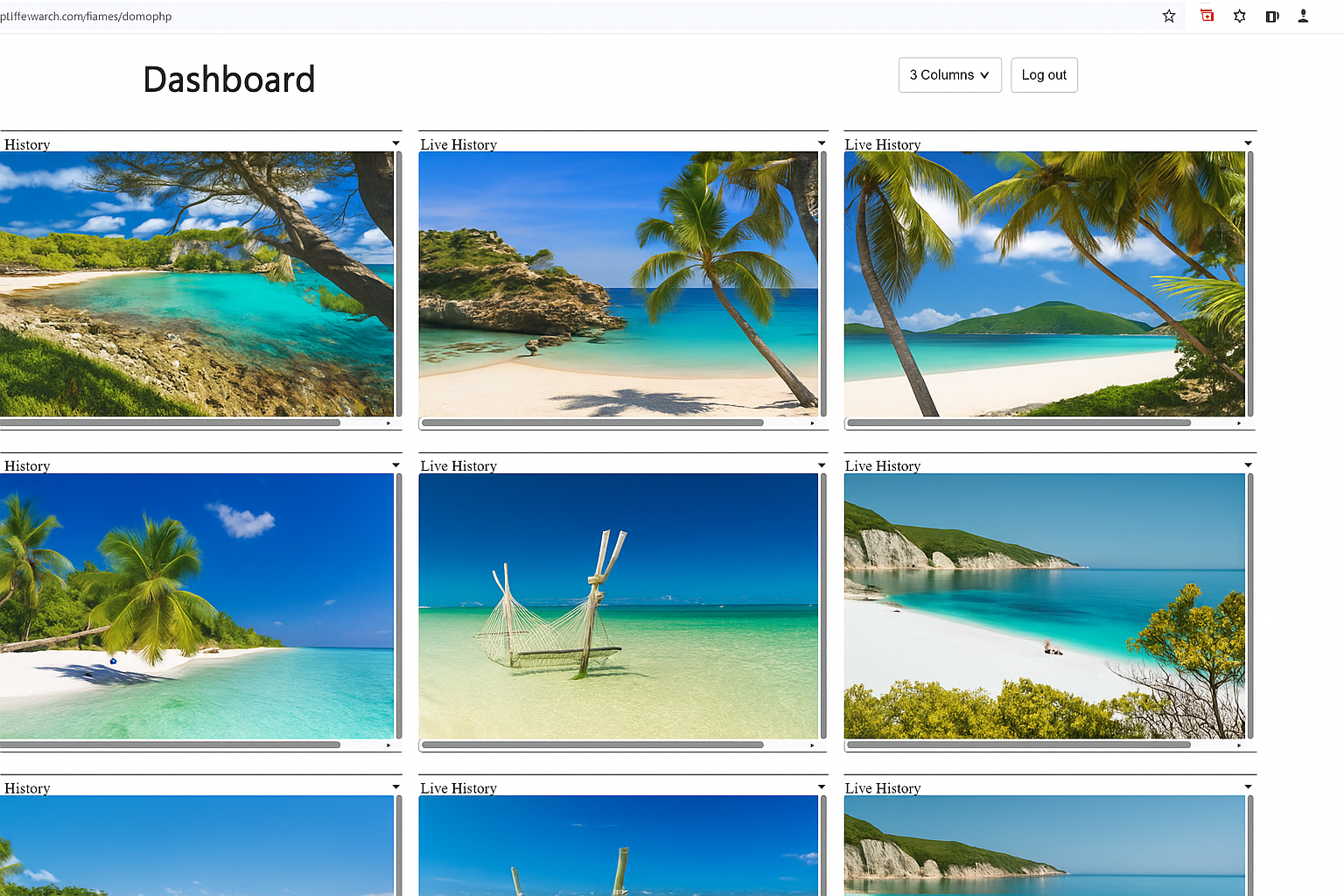
Illustrative Wolfeye dashboard: several company-controlled PCs monitored side by side. Image for technical illustration only; any real use must comply with applicable laws and regulations.
When business owners or IT service providers first hear about Wolfeye Remote Screen, the core questions are usually very simple:
- “What exactly is Wolfeye – and what can it do technically?”
- “How do I install it on a company PC and see the first live screen?”
- “How does the dashboard work when I want to monitor several PCs at once?”
At the same time, employee and screen monitoring is always a legal and sensitive topic. Whether you may use software like Wolfeye at all, for which use cases (for example, supervision of training or quality assurance) and under which conditions (for example, prior information of employees or explicit consent) depends on the laws and regulations that apply in your country, your industry and your specific situation.
This article does not provide legal advice and does not make any statement about what is permitted in any specific country or scenario. It is purely about what is technically possible and how organisations typically work with such a tool once legal questions have been clarified.
Before you deploy Wolfeye or any other monitoring software, you should always obtain individual legal advice in your region. Legal experts can help you clarify, for example:
- whether and under which conditions monitoring of company PCs is allowed at all,
- whether employees or users must be informed or give consent,
- and what internal rules or agreements (for example for training supervision) are necessary.
1. What Is Wolfeye Remote Screen – in Simple Terms?
Wolfeye Remote Screen is screen monitoring software for company-controlled Windows PCs. From a technical point of view, it focuses on two core functions:
- Live screen view: you can see the current screen content of selected company PCs in real time in a central dashboard.
- Screenshot history: depending on your configuration, you can review screen snapshots from past periods to better understand what happened on a PC at a given time.
Typical organisational use cases include, for example:
- Onboarding and training support: supervisors can see whether new staff follow the steps shown in training on company PCs.
- Quality and process assurance: owners and team leads can understand how key processes (ticket handling, data entry, back office tasks) are executed on the screen.
- Hybrid or remote work: selected office and remote PCs can be viewed in one live dashboard, so you get a clearer picture of daily operations.
- IT providers / MSPs: service providers can support clients more effectively when they technically see what happens on important PCs – where legally allowed and contractually agreed.
Wolfeye is not a replacement for your employment contracts, data protection policies, time tracking systems or your internal rules. It is a technical building block that can provide visual insight into company PCs when used in a legally compliant way.
Which of these use cases are allowed in your country and under which conditions (for example, with prior written information or explicit consent) is a legal question. You should always clarify this separately before using the software.
2. How Wolfeye Works Technically on Company PCs
From a technical perspective, Wolfeye follows a straightforward model:
- On each company-controlled Windows PC that you want to monitor, you install a small Wolfeye software component (agent).
- This agent sends the screen content of the PC to your Wolfeye dashboard via the internet.
- In the dashboard, you can see live screens and – depending on your configuration – screenshot history for the PCs where the agent is installed.
Some important technical points:
- Wolfeye focuses on screen contents (live view and screenshots). It is not a general remote desktop control tool and does not replace your existing RMM or remote access solutions.
- The software is typically installed on company PCs. Whether and under which conditions monitoring of private devices is legally permissible is a complex question and must be clarified with legal counsel before you even consider it.
- To see a PC in the dashboard at all, the software must be installed on that machine. You can decide which company PCs are included.
Technically, this makes it easy to start small: many organisations first install Wolfeye on a handful of company PCs (for example, a support team or selected training PCs) and only expand later if it proves useful and legally compliant.
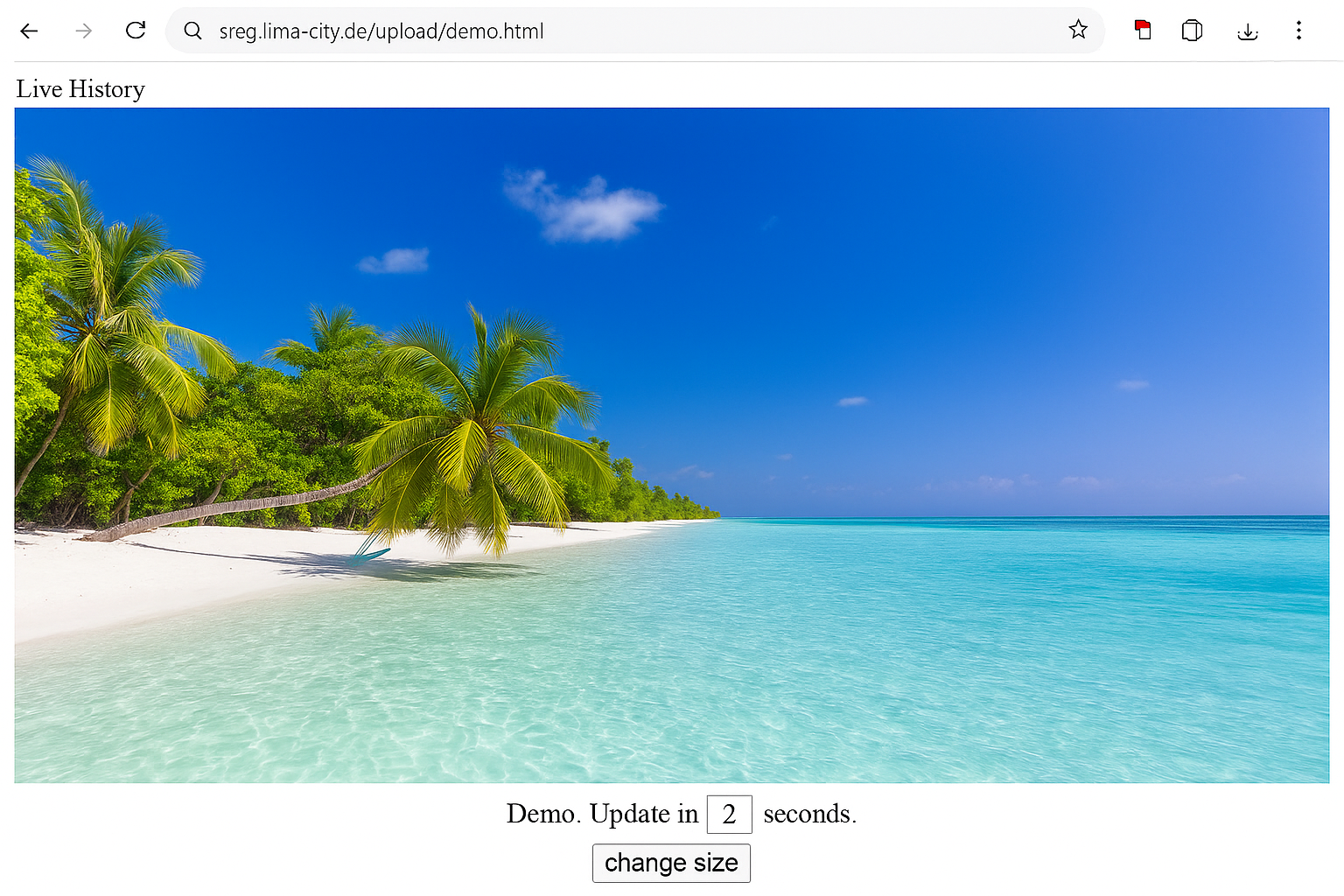
Example: live view of a single company-controlled PC in Wolfeye Remote Screen. The image is for illustration only. Whether and how you may monitor such PCs depends on the laws and regulations in your country and on your specific use case.
3. Installing Wolfeye and Monitoring Your First Company PC
Once legal and organisational questions are clarified, most SMBs and IT service providers start with a small, very practical goal:
“We want to install Wolfeye on one company PC and see the first live screen.”
From a technical point of view, the path is usually as follows (details are shown step by step in the installation video further below):
- Set up your Wolfeye account
You register with Wolfeye, receive access to the dashboard and the download for the Windows software. - Choose a company-controlled test PC
Many organisations start with a dedicated test PC or a non-critical workstation to become familiar with the software. This should be a PC that is clearly under company control. - Download and install the Wolfeye software on this PC
On the test PC, you install the Wolfeye program. The installation process is guided; in the video “How to Install Wolfeye and Monitor Your First PC Step by Step” you can see each step on screen. - Connect the PC to your dashboard
After installation, the PC will appear in your Wolfeye account. You can then open the live view of the screen in the dashboard. - Verify the connection
Open a few applications on the test PC and check whether you see them in the live view. This gives you a direct feeling for the latency and picture quality.
Technically, this is all that is needed to monitor the first company PC. What you are allowed to monitor in everyday use, which PCs may be included and under which conditions employees or users must be informed, must always be clarified separately with legal counsel.
4. Monitoring Multiple PCs at Once – How the Wolfeye Dashboard Works
After a successful pilot on one PC, many SMBs and IT providers want to see several important company PCs at once. This is where the Wolfeye live dashboard comes into play.
From a technical and organisational perspective, a typical multi-PC setup looks like this:
- You install the Wolfeye software on each company-controlled PC that should be visible in the dashboard.
- In the Wolfeye dashboard, these PCs appear as separate tiles with live screens.
- You can arrange PCs into groups (for example, “Support”, “Back office”, “Training PCs”, “Client A – Service PCs”).
- Team leads, owners or IT providers with access rights can see relevant groups at a glance.
Typical everyday questions that the dashboard can help answer technically include:
- “Which applications are currently open on the PCs of the support team?”
- “Are the training PCs being used for the intended learning software?”
- “On which screen does this problem occur that the employee is describing on the phone?”
The video “Monitoring Multiple PCs at Once – How the Wolfeye Dashboard Works” shows such a scenario in practice: you see how multiple screens appear together and how you can switch between them.
Again, it is important to emphasise: the dashboard itself does not decide what is legally allowed. It only shows what is technically possible. Which PCs you may monitor, whether you may use the dashboard for specific purposes (for example, supervision of training or quality checks), and whether and how you must inform employees depends on the legal framework in your country and on your internal policies.
5. Typical Scenarios for SMBs and IT Service Providers
Once the basics are in place, organisations often use Wolfeye in recurring patterns. From a technical and organisational point of view, some common scenarios are:
5.1 Owner-managed SMB with office and remote staff
A small or mid-sized business may use Wolfeye to gain more transparency on selected company PCs, for example:
- support or back office PCs in the office,
- company laptops of key remote staff,
- special training or onboarding PCs for new employees.
The focus is then on process understanding and training support: team leads can see whether the right systems are used and how workflows are followed on company devices.
5.2 IT service provider / MSP managing several clients
IT providers often act as the technical operator of Wolfeye for multiple client organisations. Technically, they may:
- create separate Wolfeye environments for each client,
- install the software on agreed company PCs at each client,
- support the client’s management in structuring groups and access rights.
Legal and contractual questions (for example, who is responsible for information duties toward employees) must be addressed in the client’s contracts and always clarified with legal counsel.
5.3 Training, onboarding and process documentation
In some organisations, Wolfeye is mainly used to support training and onboarding on company PCs. For example, supervisors can see on the dashboard how trainees go through certain steps in CRM, ERP or ticket systems.
Whether and how you may use screen monitoring for training supervision, whether employees must be informed in advance and what must be documented are questions that depend on national law. This article cannot answer them. Always clarify them with qualified legal experts before you start.
6. Legal Considerations and Clear Disclaimers
Because the topic is so sensitive, it is important to repeat the central limitation of this article:
This article describes technical possibilities and typical organisational patterns of using Wolfeye Remote Screen on company PCs. It is not legal advice.
In many countries, the following aspects may be relevant for the legality of screen monitoring in companies (examples only):
- Which laws and regulations apply in your country and industry (for example, data protection, employment law).
- Whether you monitor company-controlled devices or private devices.
- For which use cases monitoring is planned (for example, training supervision, quality assurance, security, other purposes).
- Whether employees or users must be informed in advance, and whether you must obtain explicit consent in certain cases.
- Whether works councils or similar bodies must be involved in your country.
Because these factors vary considerably from country to country and from case to case, this article deliberately stays on a general technical and organisational level.
Before you deploy Wolfeye or any other monitoring software, you should always obtain individual legal advice in your country. Only a qualified legal expert can tell you:
- whether and under which conditions you may monitor company PCs,
- how you must inform employees or users, and whether consent is required,
- and which internal policies, agreements or limitations are appropriate for your specific use case (for example, supervision of training, quality assurance or other purposes).
Always treat Wolfeye as a technical tool that you may only use within the boundaries of the law and your internal rules – not as a substitute for legal or HR decisions.
7. Three Short Videos: Overview, First Installation and Multi-PC Dashboard
The following three videos give you a concise visual introduction to Wolfeye from different angles. They are purely technical demos and do not replace legal advice.
7.1 Video 1 – What Is Wolfeye? Overview in 5 Minutes
This video shows the basic idea behind Wolfeye Remote Screen, who typically uses it and what the live screen dashboard looks like in practice.
7.2 Video 2 – How to Install Wolfeye and Monitor Your First PC Step by Step
Here you can follow the installation process on a Windows company PC step by step and see how the first live screen appears in the dashboard.
7.3 Video 3 – Monitoring Multiple PCs at Once: How the Wolfeye Dashboard Works
This demo focuses on the multi-PC view: how several company-controlled PCs appear together in the Wolfeye dashboard and how you can switch between them in everyday use.
Videos: technical overview, installation and multi-PC dashboard in Wolfeye Remote Screen. The videos show what is technically possible on company PCs. They do not make any statement about what is legally permitted in a specific country or situation.
Frequently Asked Questions – Wolfeye Overview and Quick Start
No. From a technical perspective, Wolfeye only shows PCs where the software is installed. Many SMBs start with a limited selection of company-controlled PCs (for example, a specific team or training PCs) and expand later if needed. Which PCs you may monitor at all should always be clarified legally beforehand.
Technically, yes: supervisors can see in the live dashboard how trainees work through processes on company PCs. Whether and under which conditions you may use monitoring for training supervision in your country depends on local laws and information or consent requirements. Always obtain legal advice before using such scenarios.
No. Wolfeye provides a visual layer (live screens and screenshot history) on top of your existing tools. It does not replace contracts, time tracking, HR policies or data protection management. It should only be used as one technical component in a larger, legally compliant setup.
Whether any form of non-transparent or secret monitoring is allowed depends entirely on the laws and regulations in your country, your industry and your specific use case. This article cannot answer that and does not give any legal recommendation. Before using monitoring software, always clarify with qualified legal counsel whether monitoring is permitted at all in your scenario and, if so, under which conditions (for example, information, consent, internal agreements).
Conclusion
Wolfeye Remote Screen is a technical tool that can make screen activity on selected company PCs visible in a live dashboard.
From a purely technical and organisational point of view, it can help SMBs and IT service providers:
- understand how processes are executed on company PCs,
- support onboarding and training on company devices,
- and monitor several important PCs at once in a central dashboard.
Wolfeye does not replace legal advice. A pragmatic approach is therefore:
- first sketch your intended use cases on paper (for example, “training PCs in department X”),
- then discuss them with your IT and legal advisors,
- and only then roll out a small pilot on clearly defined company PCs – within the boundaries set by law and your internal policies.
Want to see how Wolfeye works on your own company PCs?
Start 14-Day Free Trial
Wolfeye is monitoring software. Any use must comply with the laws and regulations that apply in your country, your industry and your specific use case (for example, supervision of training, quality assurance or security purposes). In many jurisdictions, the admissibility of monitoring depends on factors such as prior information of employees, explicit consent or further formal requirements. This article and the embedded videos are for general technical and organisational information only and do not constitute legal advice or a guarantee of legal admissibility.
Before using any monitoring software such as Wolfeye, always obtain independent legal advice in your country about whether and how you may monitor company-controlled PCs (for example in training supervision or quality assurance) and under which conditions employees or users must be informed or give consent.