Remote Staff & Freelancers: How to Watch Their PC Screens Live from Anywhere
A practical, non-legal guide for SMBs and IT service providers: how live screen monitoring for remote staff and freelancers works technically on company-controlled PCs, which use cases are common in distributed teams – and why you must always clarify legal questions separately before using such software.
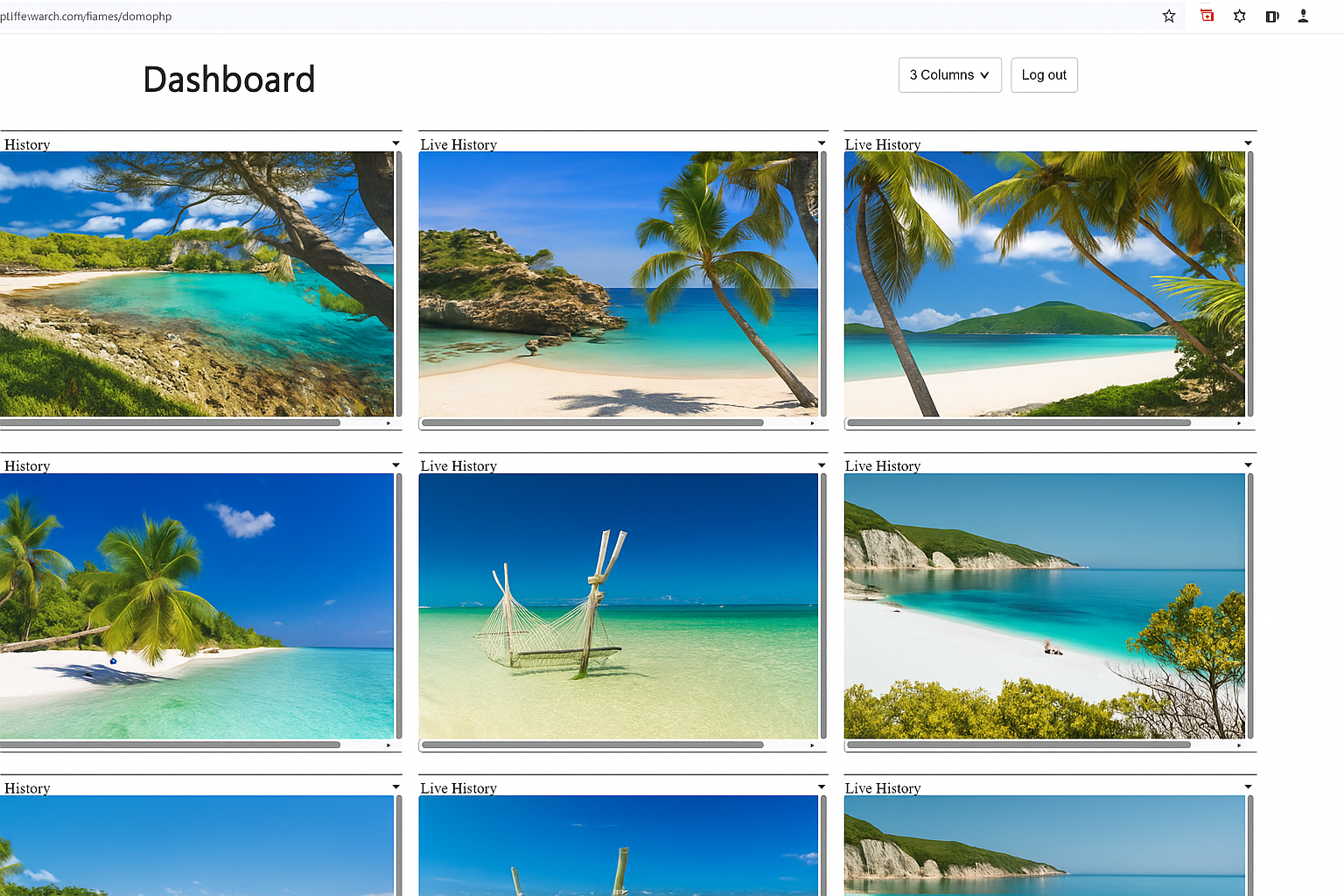
Illustrative Wolfeye dashboard with several company-controlled PCs used by remote staff and freelancers. Image for technical illustration only; any real use of monitoring must comply with applicable laws, contracts and internal policies.
Many small and mid-sized businesses now work with remote employees, external freelancers and distributed teams across several countries. Typical questions from owners and IT providers sound like this:
- “How can we see what our remote staff actually do on their PCs during working hours?”
- “Is there a way to watch freelancers’ screens live from anywhere, instead of guessing from time sheets?”
- “Can we get a real-time overview of key company-controlled devices – without jumping through four different tools?”
At the same time, screen monitoring – especially with remote staff and freelancers in different countries – is a legally sensitive topic. Whether you may use such software at all, for which purposes (for example, supervision of training, quality assurance or security) and under which conditions (for example, prior information of users, explicit consent, contractual agreements) depends on the laws and regulations that apply in each relevant country, your industry and your specific setup.
This article does not provide legal advice and does not make any statement about what is allowed in any particular country or scenario. It focuses purely on technical possibilities and typical organisational patterns when remote staff and freelancers work on company-controlled PCs.
Before you deploy Wolfeye or any other monitoring software, you should always obtain individual legal advice in all relevant jurisdictions. Legal experts can help you clarify, for example:
- whether and under which conditions you may monitor company-controlled PCs used by remote staff or freelancers,
- whether information duties, consent or special contractual clauses are required,
- and how cross-border data protection, employment law and client agreements interact in your situation.
1. Technical Basics: How Live Screen Monitoring for Remote Staff & Freelancers Works
From a technical point of view, live screen monitoring for remote staff and freelancers with Wolfeye Remote Screen follows a straightforward model:
- On each company-controlled Windows PC that you want to monitor, you install a small Wolfeye software component (agent).
- This PC can be in the office or remote – for example, at a home office, a co-working space or a client location – as long as it is technically and contractually under your control.
- The agent sends the screen contents of that PC via the internet to your Wolfeye dashboard.
- In the dashboard, authorised users can see the live screen and – depending on configuration – screenshot history.
Important technical clarifications:
- Wolfeye focuses on screen content (live view and screenshots). It is not a full remote desktop replacement.
- The typical setup is on company-controlled devices. Whether you may install monitoring software on private devices of freelancers is a complex legal and contractual question that must be clarified first.
- Monitoring is technically only possible on PCs where the software is installed and connected to your account.
This means: you can, in principle, see live screens of remote staff and freelancers from anywhere – but only on devices where you are allowed to install and run such software in a legally compliant way.
2. Typical Use Cases for Remote Staff & Freelancers (Where Legally Permitted)
Organisations that use Wolfeye for remote staff and freelancers – where legally permitted – usually focus on a few recurring use cases:
- Onboarding remote staff into complex systems: supervisors can see how remote employees work in CRM, ERP or ticket systems during the first weeks.
- Quality assurance for external service providers: for example, remote call-centre agents, back-office teams or data entry freelancers working on company-controlled PCs.
- Verifying process compliance in distributed teams: owners and team leads can check whether work steps are followed on the screen as defined in SOPs, again only on company-controlled devices.
- Support for IT providers and MSPs: managed service providers can, where contractually agreed and legally allowed, see what happens on key PCs at remote client locations.
In all of these scenarios, the aim is not “spying” but technical transparency in distributed work environments – always within the legal framework and based on clear agreements.
Example: Wolfeye dashboard with several company-controlled PCs used by remote staff and freelancers. Image for technical illustration only. Any real-world monitoring of remote workers must comply with applicable laws, contracts and internal policies.
3. Remote Setups: From Single Freelancer PC to Distributed Teams
The video “Remote Staff & Freelancers – How to Watch Their PC Screens Live from Anywhere” shows how flexible such setups can be from a technical perspective. Typical patterns include:
3.1 Single freelancer on a company-controlled PC
A very common pattern is a single freelancer who works regularly on a company laptop or a PC in a client office. In this case:
- Wolfeye is installed on this company-controlled device,
- the device is assigned to a specific group in the dashboard (for example “Freelancers” or “Project X”),
- authorised persons can open a live view when needed.
3.2 Several remote staff in one team
In distributed teams (for example, a remote support team across time zones), multiple company-controlled PCs can be grouped:
- Group per team (for example “Remote Support EU”, “Remote Support LATAM”),
- supervisors see a live mosaic of relevant PCs,
- they can quickly jump into single screens for more detail.
3.3 External agency or BPO team
Some companies work with external agencies or BPO providers who operate company-controlled PCs at their site. With the right contractual and legal foundation, these devices can be connected to a Wolfeye dashboard so the client organisation can technically see how work on those PCs is carried out.
Whether such cooperation models are legally permitted and how they must be structured contractually is a matter for legal and compliance experts.
4. Everyday Viewing Routines for Remote Work Setups
Once the technical basics are in place, many organisations develop simple routines for working with live screens of remote staff and freelancers (where legally allowed):
4.1 Short overview checks instead of constant monitoring
Instead of watching remote workers all day, owners and team leads usually perform brief overview checks at certain times:
- start-of-shift overview of key PCs,
- spot checks during peak times,
- targeted checks when specific issues or questions arise.
4.2 Supporting training and process changes remotely
When you roll out a new tool or process for remote staff, it helps to see live screens while you coach them via video calls or chat. You can:
- identify where people get lost on the screen,
- confirm that the new workflow is followed,
- give concrete instructions based on what you see.
4.3 Clarifying deviations in quality or turnaround times
If clients report quality issues or delays, the live view and screenshot history (if configured) can help you understand how remote staff and freelancers are actually working on your systems – again, only on company-controlled devices.
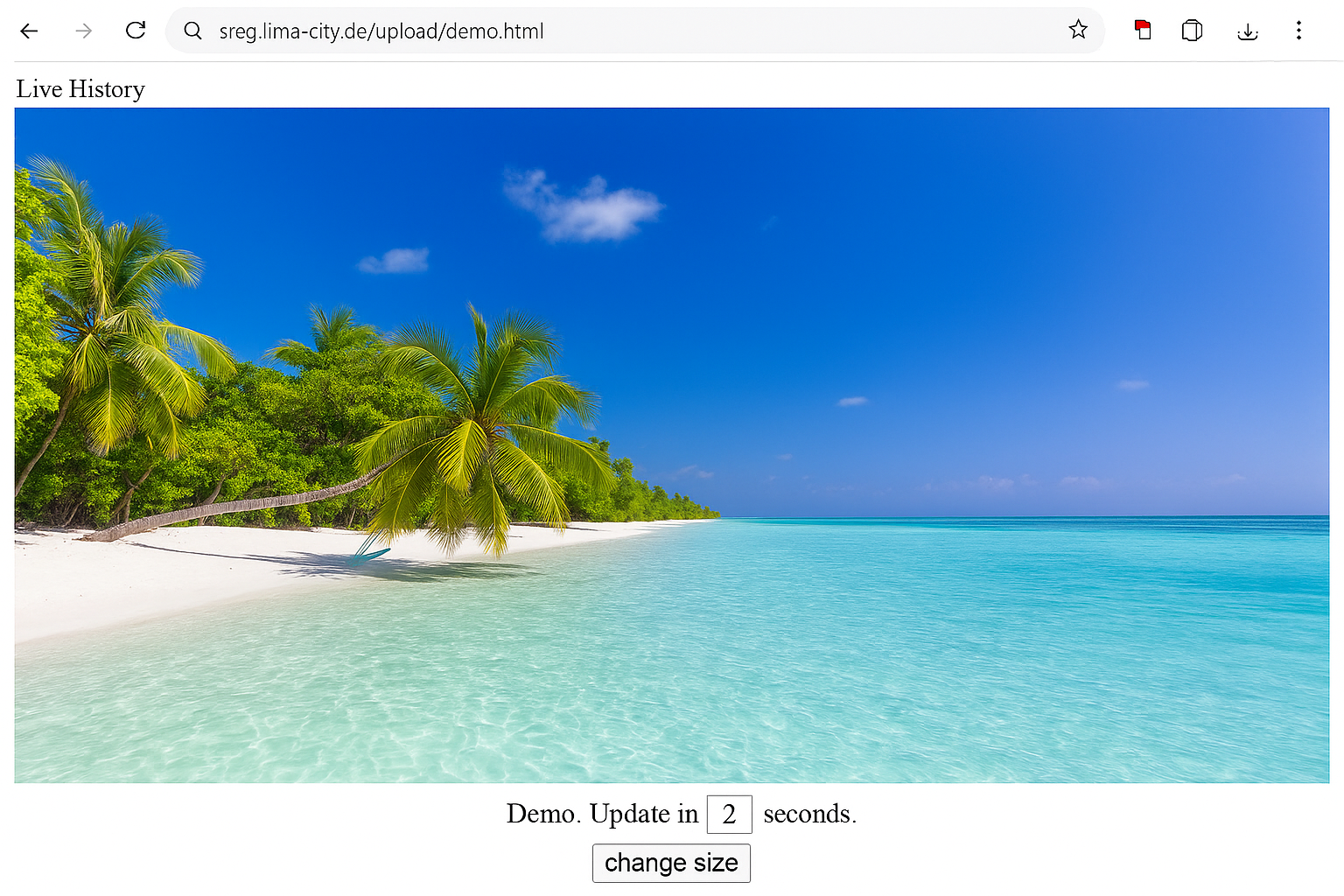
Example: live view of a single company-controlled PC used by a remote staff member. It shows the technical possibility of viewing a screen; whether and how such monitoring is allowed in your case depends on the applicable laws, contracts and your internal rules.
5. Best Practices for Working with Remote Staff & Freelancers
Because remote setups often involve multiple jurisdictions and contractual relationships, many organisations adopt basic best practices (in addition to legal advice):
- Company-controlled devices only: clearly separate company devices from private devices. Monitoring private hardware is often highly sensitive or not allowed.
- Defined use cases: document why live screen monitoring is used (for example, training, quality assurance, security) and which PCs are covered.
- Limited access: restrict dashboard access to a small group of authorised persons and use role-based access.
- Contractual clarity with freelancers and providers: make sure contracts and agreements reflect how tools like Wolfeye may be used, always in line with applicable law.
- Transparency where required: where laws or contracts demand it, inform remote staff and freelancers adequately and document this process.
These points do not replace legal advice but can help you structure discussions with your legal, HR and compliance teams.
6. Legal Considerations and Explicit Disclaimer
Because this article deals with remote staff and freelancers across different countries, a very clear disclaimer is essential:
This article describes technical possibilities and typical organisational patterns when using Wolfeye Remote Screen on company-controlled PCs used by remote staff and freelancers. It is not legal advice and does not state what is allowed in any country, jurisdiction or individual case.
In many situations, the legality of monitoring remote workers depends on factors such as (examples only):
- which laws and regulations apply in each country involved (for example, data protection, employment law, teleworking rules),
- whether you monitor company-controlled devices only or also private devices,
- for which purposes monitoring is used (for example, training supervision, quality assurance, security),
- whether information, consent or contractual clauses are required for employees, freelancers and service providers,
- whether additional requirements apply due to cross-border data transfers or sector-specific rules.
Before you deploy Wolfeye or any other monitoring software for remote staff and freelancers, you should always obtain individual legal advice in all relevant jurisdictions. Only qualified legal experts can tell you:
- whether and under which conditions you may monitor company-controlled PCs in your specific setup,
- how to structure information, consent and contractual terms,
- and which internal policies, limitations and documentation requirements are appropriate.
Always treat Wolfeye as a technical tool that can only be used within the legal framework and your internal rules – not as a substitute for legal, HR or compliance decisions.
7. Video: Remote Staff & Freelancers – How to Watch Their PC Screens Live from Anywhere
The following video shows a technical demo of how you can watch the PC screens of remote staff and freelancers live from anywhere on company-controlled devices with Wolfeye Remote Screen.
The video is for technical and organisational illustration only and does not replace legal advice. It does not guarantee that any specific use of monitoring is lawful in your country or in your individual situation.
Video: „Remote Staff & Freelancers – How to Watch Their PC Screens Live from Anywhere“. The video shows what is technically possible with Wolfeye Remote Screen on company-controlled PCs. It does not make any statement about what is legally permitted in any particular country or use case.
Frequently Asked Questions – Remote Staff & Freelancers
From a technical perspective, Wolfeye must be installed on the PC to show the screen. Whether you may install monitoring software on a freelancer’s private device at all is a complex legal and contractual question. This article does not answer that. Always clarify such scenarios with legal counsel before considering them.
Technically, yes – as long as the company-controlled PCs are connected to the internet and to your Wolfeye dashboard. However, cross-border monitoring raises additional legal and data protection questions (for example, applicable law, data transfers) that must be clarified with legal experts.
No. Wolfeye provides visual insight into screen activity (live view and screenshot history, depending on configuration). It is not a dedicated time tracking system and does not replace contracts, HR tools or data protection management.
This is not a purely technical question. Storage duration and deletion rules should always be defined together with legal counsel and, where applicable, data protection officers – especially in cross-border setups.
Conclusion
Live screen monitoring for remote staff and freelancers is first of all a technical possibility – not an automatic permission.
From a technical and organisational perspective, Wolfeye Remote Screen can help you:
- see how remote staff and freelancers work on company-controlled PCs in real time,
- support training and process changes in distributed teams,
- and gain better insight into quality and workflows across locations.
A pragmatic approach can be:
- first clearly define your intended use cases for remote staff and freelancers (for example, “training PCs in country A”, “quality checks for project X”),
- then discuss them with your IT provider, HR and legal advisors in all relevant jurisdictions,
- and only then roll out a focused pilot on clearly defined, company-controlled devices – within the boundaries set by law and your internal policies.
Want to see how remote staff & freelancer screens could look in your own live dashboard?
Start 14-Day Free Trial
Wolfeye is monitoring software. Any use must comply with the laws and regulations that apply in all relevant countries, your industry and your specific use case (for example, supervision of training, quality assurance or security). In many jurisdictions, the admissibility of monitoring remote staff and freelancers depends on factors such as prior information, explicit consent, data protection rules and contractual terms. This article and the embedded video are for general technical and organisational information only and do not constitute legal advice or a guarantee of legal admissibility.
Before using any monitoring software such as Wolfeye, always obtain independent legal advice in all relevant countries about whether and how you may monitor company-controlled PCs used by remote staff and freelancers (for example in training, quality assurance or security scenarios) and under which conditions users must be informed or give consent.