Top 10 Monitoring Tools Compared: Why Wolfeye is the Smartest Choice for SMB
A practical comparison for SMBs and IT service providers: how Wolfeye Remote Screen fits into the spectrum between simple live screen tools, time tracking with screenshots, full forensic suites and workforce analytics platforms – without putting any competitor in a bad light. No legal advice.
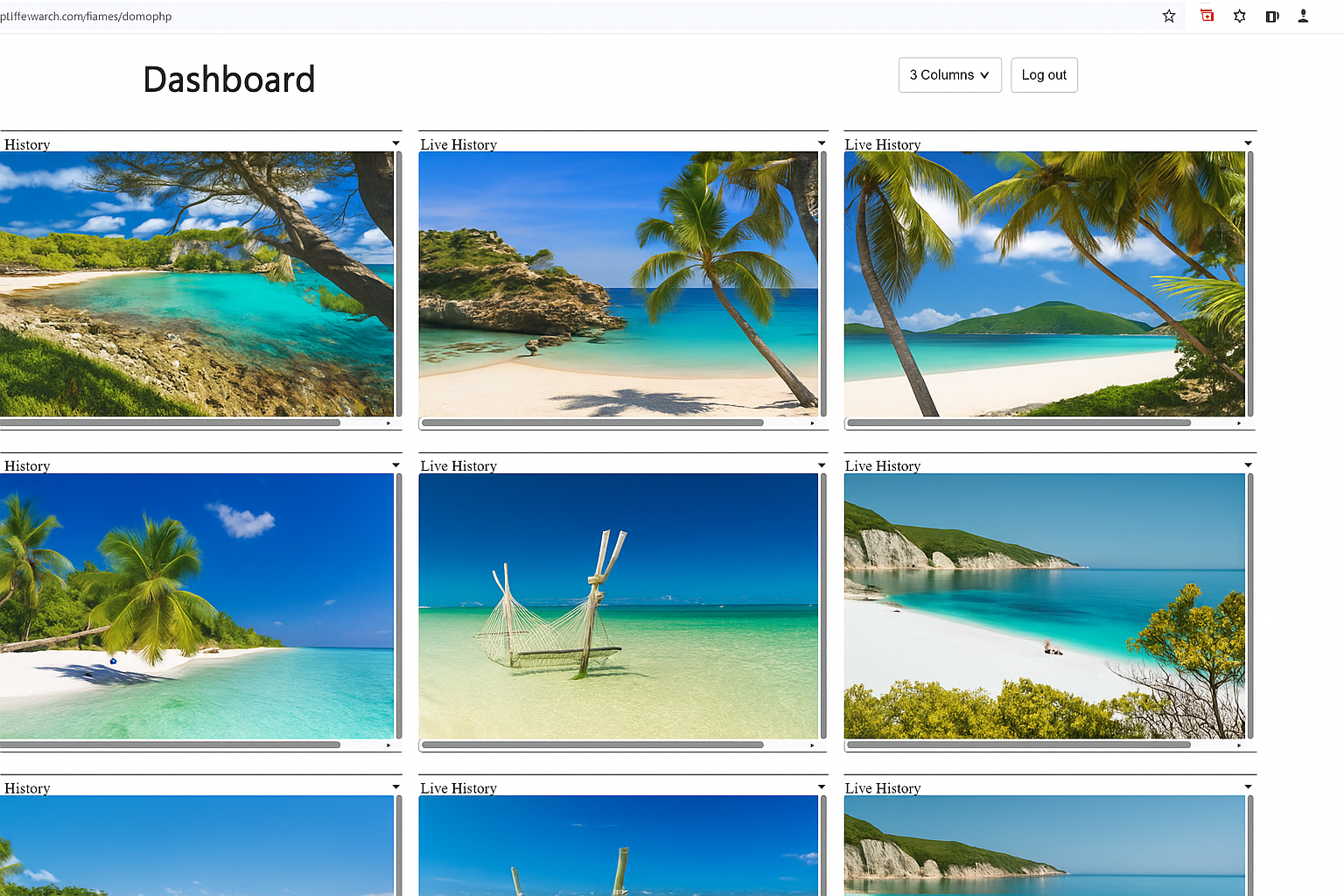
Illustrative Wolfeye-style dashboard. This article groups Wolfeye Remote Screen and other tools into product families without rating them as better or worse – it describes technical options only.
In the individual articles from post15 to post24, Wolfeye Remote Screen was compared 1:1 with other tools – including Teramind, Veriato, Kickidler, Controlio, MoniVisor, Monitask, Hubstaff, ActivTrak and Insightful.
Many readers then ask a simple question:
"Where does Wolfeye sit in the overall landscape – and when does another tool make more sense?"
This article summarises the key points from those comparisons and groups the tools into four broad families:
- Enterprise monitoring suites with forensics and DLP (e.g. Teramind, Veriato)
- Full monitoring including keystrokes (e.g. Kickidler, Controlio, MoniVisor)
- Time tracking & screenshots (e.g. Monitask, Hubstaff)
- Workforce analytics & productivity platforms (e.g. ActivTrak, Insightful)
All descriptions are based on publicly available vendor information and serve only as technical and organisational orientation. This article is not legal advice and does not replace individual product or financial advice.
1. Market overview: four product families instead of one "best" solution
On marketing pages, many tools look similar – you will often see terms like "employee monitoring", "productivity tracking", "insider risk" or "workforce analytics". In practice, they tend to fall into four broad families:
- Enterprise monitoring & forensics (e.g. Teramind, Veriato): broad suites with screen recording, keystroke logging, file and communication auditing, DLP and compliance reporting.
- Full monitoring including keystrokes (e.g. Kickidler, Controlio, MoniVisor): strong focus on detailed activity data, including keystrokes, websites, apps and sometimes stealth options.
- Time tracking & screenshots (e.g. Monitask, Hubstaff): primarily time-tracking tools with optional screenshots, reports and often billing or payroll features.
- Workforce analytics & productivity (e.g. ActivTrak, Insightful): platforms that aggregate digital activity data to provide team- and organisation-level insights.
All of these solutions can process sensitive data depending on how they are configured. It is therefore important to look at technical capabilities, organisational goals and legal framework separately.
2. Enterprise suites with forensics & DLP: Teramind & Veriato
Teramind and Veriato are examples of more comprehensive suites. They usually combine:
- live views and screen recording or playback,
- keystroke logging and other detailed telemetry,
- policy and alert rules,
- DLP modules and monitoring of file and communication activity,
- reports and, in some editions, behaviour analytics.
These products are particularly relevant for larger or more regulated organisations that need very detailed logging and forensics – for example as part of internal controls, audits or investigations.
For many smaller businesses this creates a tension:
- the feature set is large and requires time for planning, configuration and ongoing maintenance,
- the tools can collect large amounts of detailed data, which must be carefully assessed from a legal and organisational perspective.
In that context, Wolfeye Remote Screen is more a focused live screen component on selected company PCs – for example for training or quality assurance scenarios where full forensic coverage is not required.
3. Full monitoring with keystrokes: Kickidler, Controlio, MoniVisor
Solutions such as Kickidler, Controlio and MoniVisor typically offer:
- live screen monitoring and often historical playback,
- tracking of apps, websites and file activity,
- detailed keystroke reports depending on configuration,
- configuration options for visible or less visible operation, depending on the product.
The main technical advantage is very high granularity in activity analysis. At the same time, this usually means collecting more data – especially where keystrokes or message content are recorded.
Wolfeye deliberately takes a different route:
- no keystroke logging, no chat or e-mail content scanning,
- a focus on live screen views and – if desired – interval-based screenshots on company-controlled Windows PCs,
- a comparatively lean data footprint that can be easier to explain and manage.
Whether keystroke logging or deep monitoring is legally permitted or organisationally desirable depends heavily on jurisdiction, sector, internal rules and specific purpose and always requires separate legal assessment.
4. Time tracking & screenshots: Monitask & Hubstaff
Monitask and Hubstaff are typical time-tracking tools with optional screen evidence:
- their core function is tracking time per project, client or task,
- they can take automatic screenshots as proof of work, depending on configuration,
- many editions offer budgeting, invoicing, payroll and team reports.
These tools are designed for scenarios where billing, project control and utilisation are the main goals. Monitoring is usually part of a broader time-tracking and billing workflow rather than a stand-alone objective.
Wolfeye Remote Screen sits elsewhere:
- it is not a full time-tracking or payroll suite,
- it provides live insight into selected PCs to understand workflows, support training or check quality,
- and it can be combined with screenshot history on those devices where this is needed.
5. Workforce analytics & productivity platforms: ActivTrak & Insightful
ActivTrak and Insightful represent tools that act primarily as analytics platforms:
- they aggregate activity data across many devices and users,
- calculate metrics such as focus time, meeting load and app or website usage,
- provide dashboards for teams, departments and leadership.
Here, monitoring is mainly used to identify patterns and trends at team level – for example signs of overload, bottlenecks or opportunities to simplify workflows.
For organisations that are mainly interested in capacity planning and workforce analytics, such platforms can be a good fit – provided legal and internal policy questions are addressed properly.
Comparison at a glance: product families
The following comparison table summarises the main differences between the four product families. It does not replace a detailed product evaluation but helps as a starting point.
| Category | Typical tools (examples) | Primary focus | Typical data | Complexity for smaller organisations | When it is typically used |
|---|---|---|---|---|---|
| Enterprise monitoring & forensics | Teramind, Veriato | Security, compliance, forensic investigations | Screens, keystrokes, file and communication activity (depending on configuration) | Rather high – planning, configuration and maintenance are required | Regulated environments, larger organisations, internal investigations, DLP use cases |
| Full monitoring including keystrokes | Kickidler, Controlio, MoniVisor | Detailed user activities and productivity | Screens, apps/websites, keystrokes, sometimes file and message data | Medium to high – careful assessment of data scope and transparency is required | Scenarios that need very granular activity analysis, where legally permitted |
| Time tracking & screenshots | Monitask, Hubstaff | Time, billing and project control | Working time, project data, automatic screenshots, activity metrics | Medium – close ties to HR, payroll and project processes | Remote teams, project-based work, agencies and service providers billing by the hour |
| Workforce analytics & productivity | ActivTrak, Insightful | Aggregated productivity and capacity analytics | App/website usage, focus time, meeting load, aggregated activity patterns | Medium – focus on data models and interpretation | Organisations that want to optimise team-level patterns and capacity |
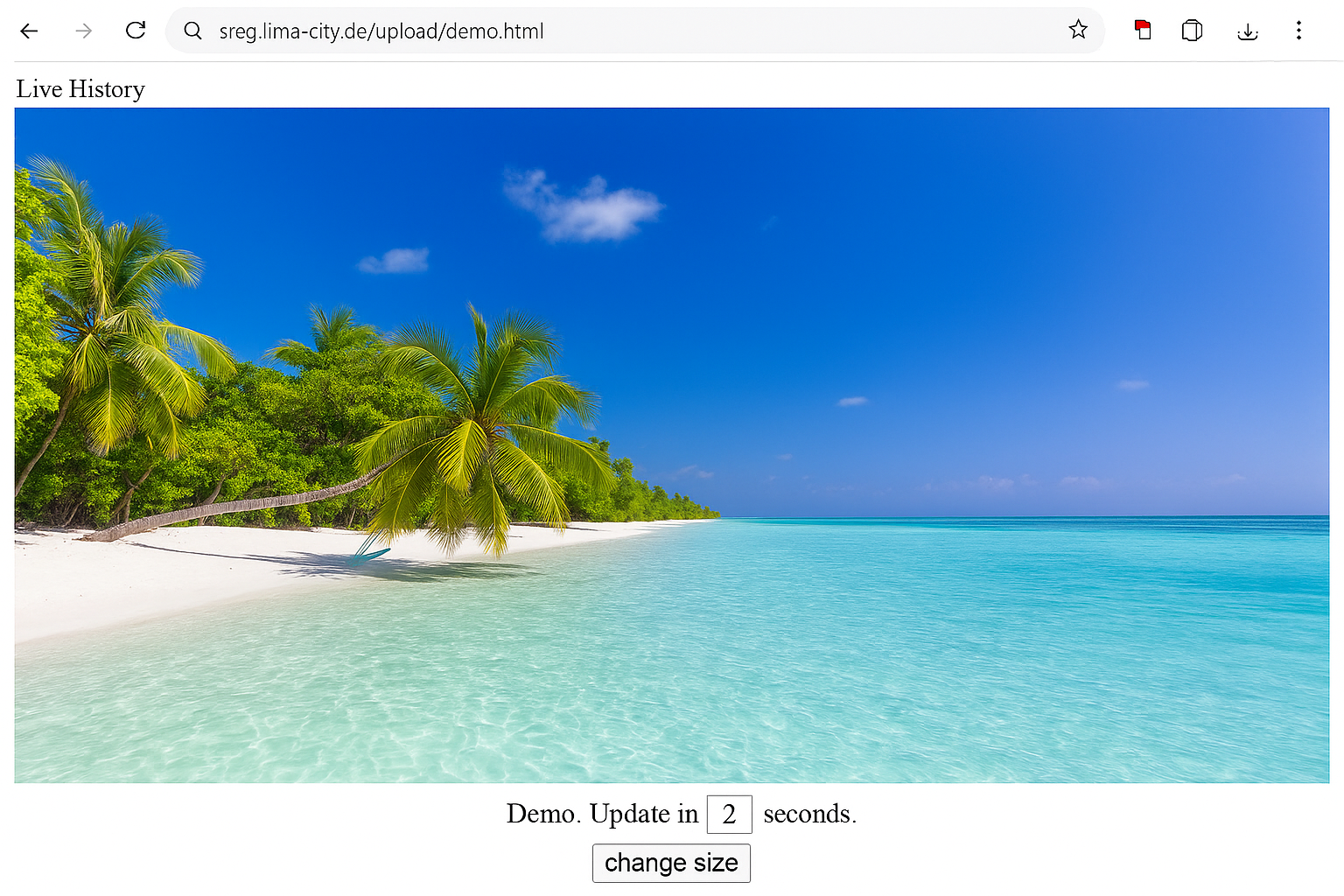
Live screen view on a company-controlled PC with Wolfeye Remote Screen. Whether and how such monitoring may be used depends on applicable laws, contracts and internal policies – this article does not make any legal statement.
6. Where does Wolfeye fit? Focused live screens for SMBs and IT providers
Across the individual comparison articles, a clear pattern emerges for Wolfeye Remote Screen:
- live screen view on selected company-controlled Windows PCs – in the office, at home or at remote locations,
- optional screenshot history to reconstruct workflows without recording all low-level data such as keystrokes,
- a simple dashboard that can also be used by non-specialists such as owners, team leads or service desk staff,
- interesting for IT service providers who want to offer focused monitoring as a managed service for SMB clients.
6.1 Typical scenarios where Wolfeye stands out in practice
- Onboarding and training: watching training PCs live to see exactly where people struggle in complex applications.
- Quality assurance in support and back office: occasional live checks on selected workplaces to confirm process compliance.
- Support for MSPs: a quick overview of key PCs at different client sites without opening multiple remote desktop sessions.
6.2 Example scenario: IT provider with 40–50 managed PCs
A recurring pattern in the detailed articles is an IT provider managing around 40–50 PCs for several SMB customers. Antivirus, backup and patching are in place; an additional live monitoring layer is requested without rolling out a full forensic or analytics suite.
In such a scenario the provider can:
- install Wolfeye on selected company-controlled PCs,
- define clear use cases together with each client (for example training PCs, support desks, sensitive workstations),
- and clarify the legal framework (information duties, consent, works council agreements, contracts) together with clients and their advisors.
Wolfeye then becomes a targeted building block in the toolbox of SMBs and IT providers – not a "one-size-fits-all" solution.
Frequently asked questions – overall comparison
No. They are designed for scenarios where very deep logging, DLP and forensics are required – often in larger or more regulated environments. For many smaller organisations that level of detail is not necessary. In those cases a focused live screen component like Wolfeye on selected PCs can be sufficient. The right choice always depends on the specific situation.
They simply follow a different approach with more granular data (including keystroke reports, depending on configuration). Wolfeye chooses a leaner approach and focuses on live screens and screenshots. Which model is appropriate depends on objectives, legal framework and company culture.
From a technical perspective, it can be possible to run multiple monitoring, time-tracking or analytics tools in the same environment, as long as they do not conflict. Whether this is useful or permissible is an organisational and legal question that should be clarified with internal stakeholders and legal counsel.
Pricing models and discounts change frequently and depend on seats, editions, terms and regions. Any concrete values from individual articles or third-party sources are snapshots only. For purchasing decisions you should always consult the latest information directly from each vendor.
No. Any use of monitoring, time tracking or analytics software raises legal questions – for example regarding data protection, labour law, co-determination and contractual duties. This article can only provide technical and organisational orientation. Before deploying or changing any monitoring, you should always obtain qualified legal advice in all relevant jurisdictions.
Conclusion
Instead of looking for "the best tool", it is more useful to map your own situation calmly and clearly.
- If you need forensic depth, DLP and compliance reporting, enterprise suites like Teramind or Veriato are often the natural candidates.
- If you want very detailed activity analysis including keystrokes, tools like Kickidler, Controlio or MoniVisor may be in scope.
- If your main concern is project time, billing and utilisation, tools like Monitask or Hubstaff are worth looking at.
- If your focus is on workforce analytics and capacity planning, ActivTrak or Insightful may be a better match.
- And if you need lean live screen monitoring on company-controlled Windows PCs, Wolfeye Remote Screen can be evaluated as a focused option.
Want to see how Wolfeye Remote Screen could look in your own environment?
Start 14-day free trialAll product names, logos and brands are property of their respective owners. Descriptions are based on publicly available information at the time of writing and do not claim to be complete or error-free. This article does not constitute legal advice or a recommendation for or against any particular vendor and does not replace individual product or financial advice. Any use of monitoring, time tracking or analytics software must comply with applicable laws, contracts and internal policies in all relevant countries.