Remote Desktop vs Live Screen Monitoring: What’s the Real Difference?
A practical, non-legal guide for SMB owners and IT service providers: when remote control is the right tool — and when a live screen dashboard is the better choice.
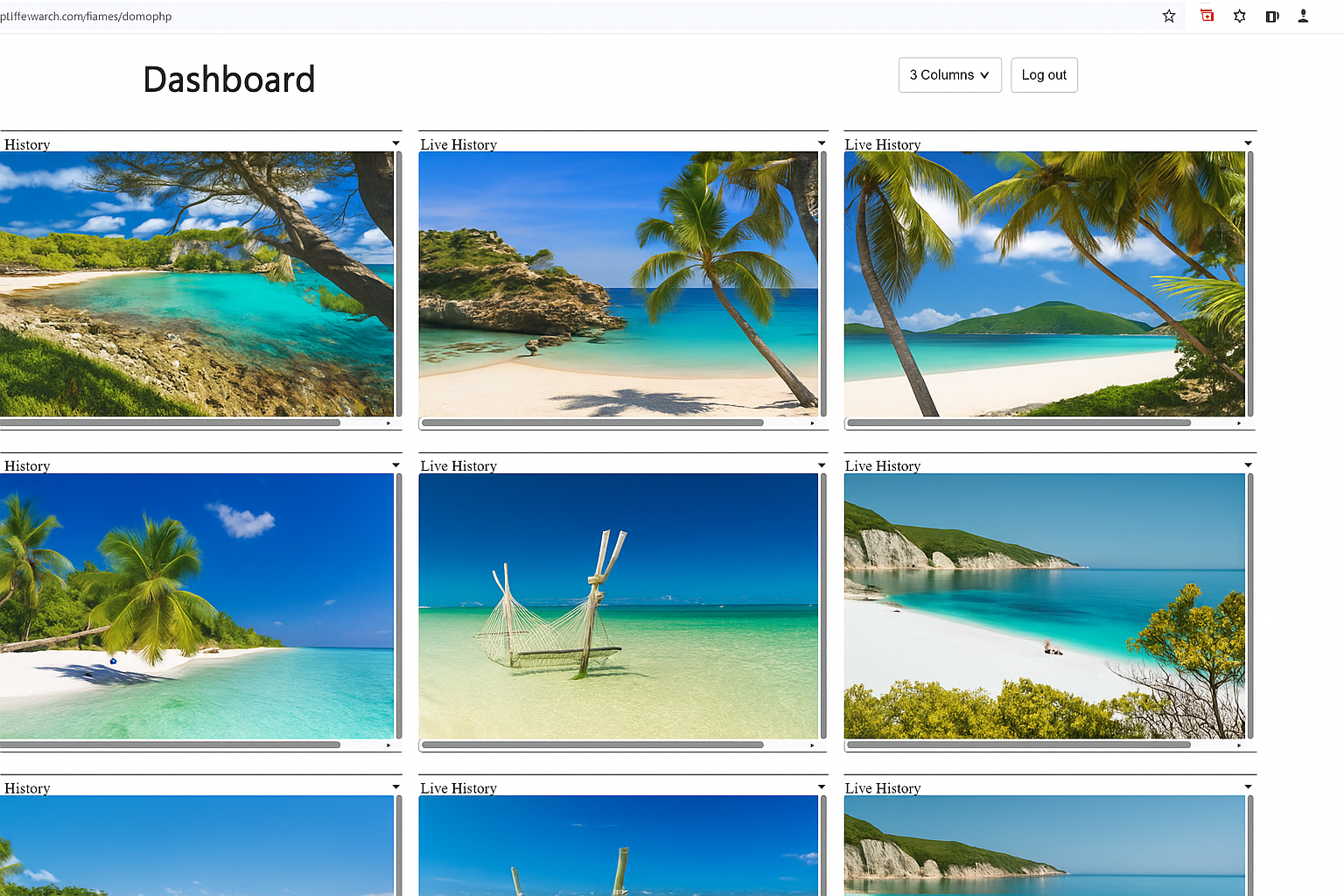
Illustrative Wolfeye dashboard with several company-controlled PCs. Image for technical illustration only; any real monitoring must comply with applicable laws, contracts, internal policies, and required user information/consent.
Many business owners and even experienced IT providers accidentally mix up two very different categories:
remote desktop control (you can take over a PC) and live screen monitoring (you can see screens in real time — usually without controlling them).
That confusion leads to wrong tool choices, unnecessary friction in daily operations, and unrealistic expectations like “Let’s use TeamViewer as a monitoring system”.
In this article you’ll learn, from a purely technical and operational perspective:
- what remote desktop control is designed for,
- what live screen monitoring dashboards are designed for,
- how both behave in real SMB environments (remote + office + hybrid),
- and how to choose the right approach for your use case.
1) What is Remote Desktop Control?
Remote desktop control (often called “remote support” or “remote access”) is built for one main goal: helping someone on a computer by controlling that computer remotely.
Classic examples include TeamViewer, AnyDesk, and built-in options like Windows RDP (Remote Desktop Protocol). While features differ between products, the typical concept is:
- someone initiates a support session,
- the user often sees a prompt or indicator,
- the technician can move the mouse, type, open settings, install updates, etc.
In other words: remote desktop is “hands-on control”. It’s excellent when you need to fix, configure, support, or operate a PC. It is not primarily designed to provide a scalable “visibility wall” across many PCs.
2) What is Live Screen Monitoring (and what it is not)?
Live screen monitoring focuses on a different goal: fast visual visibility into what is currently on one or many company-controlled PCs — often from a single dashboard.
With a tool like Wolfeye Remote Screen, the typical technical pattern is:
- a small component (agent) is installed on each company-controlled Windows PC,
- authorised viewers open a browser dashboard,
- the dashboard shows a grid view of multiple live screens,
- you can open a single PC in a larger live view,
- optionally, you can enable screenshot history to review past screen states.
What it is not: live screen monitoring is not a replacement for remote support. In most monitoring-first setups, the viewer is not “taking over” the PC. The core value is visibility, not control.
Example: a live screen monitoring dashboard showing multiple company-controlled PCs side by side. Illustration only. Any real monitoring must comply with applicable laws, contracts, internal policies, and required user information/consent.
3) The real-world difference: Control vs Visibility
The fastest way to understand the difference is to compare what each tool is optimised for:
Remote desktop control is optimised for “one PC, active intervention”
- Best when you need to do something on the PC (support, configuration, troubleshooting).
- Usually one technician focuses on one device/session at a time.
- Often includes explicit connection steps and user interaction (depending on settings).
Live screen monitoring is optimised for “many PCs, fast overview”
- Best when you need to see what is happening across a set of PCs (operations, training supervision, quality checks, incident clarification).
- Designed for a dashboard view where one person can scan multiple screens quickly.
- Enables “look → decide → act” workflows: you see something unusual, then decide whether to contact the user, open a ticket, or (separately) start a remote support session.
4) Disruption and user experience: why SMB teams “feel” the difference
In day-to-day work, these tools behave differently for the person sitting at the PC:
Remote desktop control tends to be visible and disruptive (by design)
- The user might see a connection popup, a cursor moving, windows opening, or a “session active” indicator.
- It is great for helpdesk support — but it can interrupt work if used frequently.
- It is not an efficient way to “just check what is going on” across 20–50 PCs.
Live screen monitoring can be less intrusive for operations (depending on configuration)
- Supervisors can view a dashboard without needing the user to stop and accept a support session each time.
- It supports workflows like “training supervision” or “spot checks” where you want quick visibility rather than remote control.
- However, whether and how you may use background or discreet modes is a legal and policy question — always clarify this with legal counsel.
5) Scale: why a dashboard matters when you have more than a few PCs
Many SMBs start with remote desktop tools because they already use them for IT support. That is sensible — until the requirement changes.
If your real need is:
- “I want to see multiple PCs at once,”
- “I want to spot issues early without calling people all day,”
- “I want to supervise onboarding/training on the actual live system,”
- “I want a quick visual check when something seems off,”
…then trying to force remote desktop into a monitoring role becomes inefficient. You end up opening sessions one by one, switching windows, and wasting time. A monitoring-first dashboard is built for exactly that “many screens” situation.
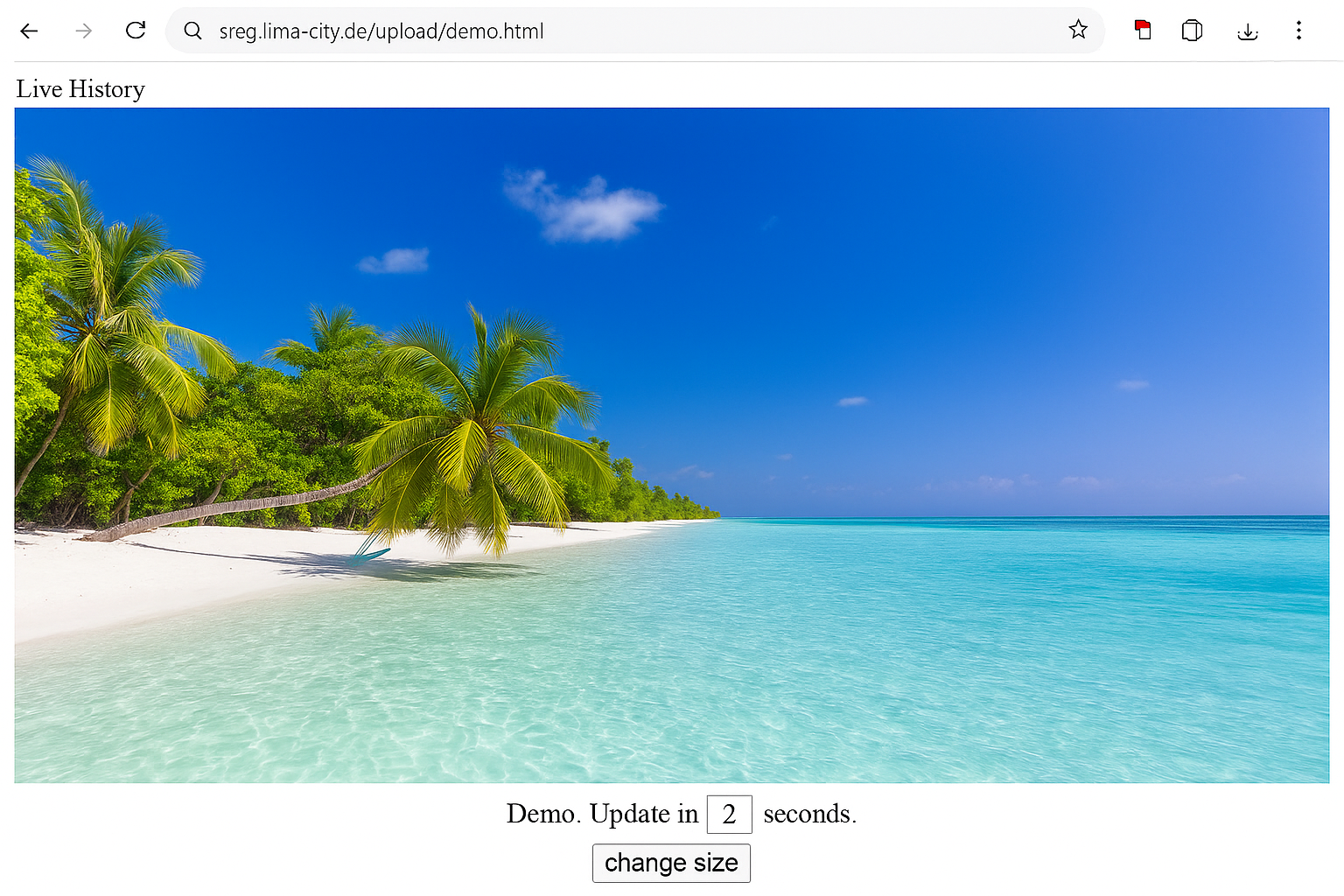
Example: a single PC opened in a large live view. This illustrates technical capability only. Whether and how you may monitor screens depends on your local laws, contracts, internal policies, and required transparency/consent.
6) When should you use which? A simple decision framework
Use the following quick questions to decide:
Choose remote desktop control if…
- you need to fix something (install software, change settings, troubleshoot),
- you need hands-on IT support for one device,
- you are doing device onboarding, patching, or configuration work.
Choose live screen monitoring if…
- you need a visual overview across multiple PCs,
- you want to support training and onboarding by seeing the actual workflow on screen,
- you want to clarify incidents by reviewing (optional) screenshot history,
- you want quick visibility in remote/hybrid teams without constantly starting support sessions.
In many SMBs, the best answer is “both” — but used correctly
A common best practice is: use live screen monitoring for visibility and remote desktop for intervention. You scan the dashboard, identify a PC that needs attention, then start a remote support session only if needed.
7) Practical scenarios for SMBs and IT providers (MSPs)
Scenario A: Onboarding and training supervision
A new hire is learning a CRM or ERP workflow. With remote desktop control, the trainer must repeatedly connect, take over, and potentially interrupt the employee’s flow. With live screen monitoring, the trainer can watch the workflow and step in only when needed (for example by chat, call, or a targeted support session). This keeps training efficient — where legally permitted.
Scenario B: Call centers or operations teams (live “screen wall”)
Supervisors often want a “wall of screens” to see the operational status at a glance. Remote desktop tools are not built for that multi-screen scanning workflow. A dashboard grid view is.
Scenario C: MSP supporting a client’s productivity + security operations
IT providers can use monitoring dashboards (where contractually agreed and lawful) to help clients get visibility across key PCs: e.g., dispatching stations, support desks, back office, or remote staff. The client gains transparency; the MSP can package this as a managed service with reporting/training support.
Reminder: these are technical/operational examples only. Always clarify legal admissibility, permitted purposes, and information/consent requirements with legal counsel in the relevant country/countries.
8) How Wolfeye fits into this comparison (technical summary)
Wolfeye Remote Screen is built for the “visibility” side of the equation:
- Live screens in a browser (updated frequently) — useful for quick checks and operational overview.
- Central dashboard that scales from a small office to larger SMB setups.
- Optional screenshot history to review what was on a screen at specific times (depending on configuration).
- Works across office + remote PCs as long as they are company-controlled Windows devices connected to the internet.
If your goal is to remotely “drive” a computer (install, repair, configure), keep using your remote support tools. If your goal is to see many PCs and understand what is happening in real time, a live monitoring dashboard is usually the better fit.
9) Video: Remote Desktop vs Live Screen Monitoring — What’s the Real Difference?
The following video demonstrates the technical and practical differences, including what a live screen dashboard looks like.
Disclaimer: the video is for technical illustration only and does not provide legal advice. Always obtain qualified legal advice before using monitoring software, and ensure you only monitor devices you own/control and where you have a valid legal basis and any required user information/consent.
Video: “Remote Desktop vs Live Screen Monitoring — What’s the Real Difference?”. Technical demo only. It does not determine what is legally permitted in your country or your scenario.
Frequently Asked Questions — Remote Desktop vs Live Screen Monitoring
Usually no. Remote desktop tools are built for active support and remote control. Live monitoring is built for visibility and multi-screen overview. Many SMBs use both: monitoring for visibility, remote desktop for intervention.
Not necessarily. Many setups focus on live view. Some setups additionally use optional screenshot history (interval-based) to review past screen states. The exact behaviour depends on configuration and retention settings.
Technically, yes — as long as they work on company-controlled Windows PCs with the monitoring component installed and connected to the internet. Legal admissibility depends on your country and use case.
Ask: “Do we need to control the PC (fix/configure), or do we need to see what’s happening across many PCs (visibility)?” That usually makes the answer obvious.
In many jurisdictions, yes — but requirements vary. This article is not legal advice. Always obtain legal advice and create the required internal policies and transparency steps before deployment.
Conclusion
Remote desktop control and live screen monitoring solve different problems.
If you need to fix computers, configure systems, or provide IT support, remote desktop is the right tool.
If you need fast visibility across many company PCs — for operations, training supervision, quality checks, or incident clarification — a live screen dashboard is usually the better fit.
The most efficient SMB setups often use both: monitoring for visibility, remote control for intervention — always within the legal framework of your country and your specific scenario, and after obtaining independent legal advice.
Want to see what a live screen dashboard looks like for your company PCs?
Start 14-Day Free Trial
Wolfeye is monitoring software. Any use must comply with the laws and regulations that apply in all relevant countries, your industry and your specific use case (for example supervision of training, quality assurance or security). In many jurisdictions, admissibility depends on factors such as prior information of users, explicit consent, internal policies, works council agreements and contractual terms. This article and the embedded video are for general technical and organisational information only and do not constitute legal advice or a guarantee of legal admissibility.
Before using any monitoring software such as Wolfeye, always obtain independent legal advice in all relevant countries about whether and how you may monitor company-controlled PCs (for example for training supervision, quality assurance or security), and under which conditions users must be informed or give consent.