How Much Bandwidth Does Live Screen Monitoring Use?
Wolfeye is screenshot-based (about every 3 seconds), not a continuous video stream. Here’s how to estimate real bandwidth, avoid slow networks, and plan rollouts for SMBs and MSPs.
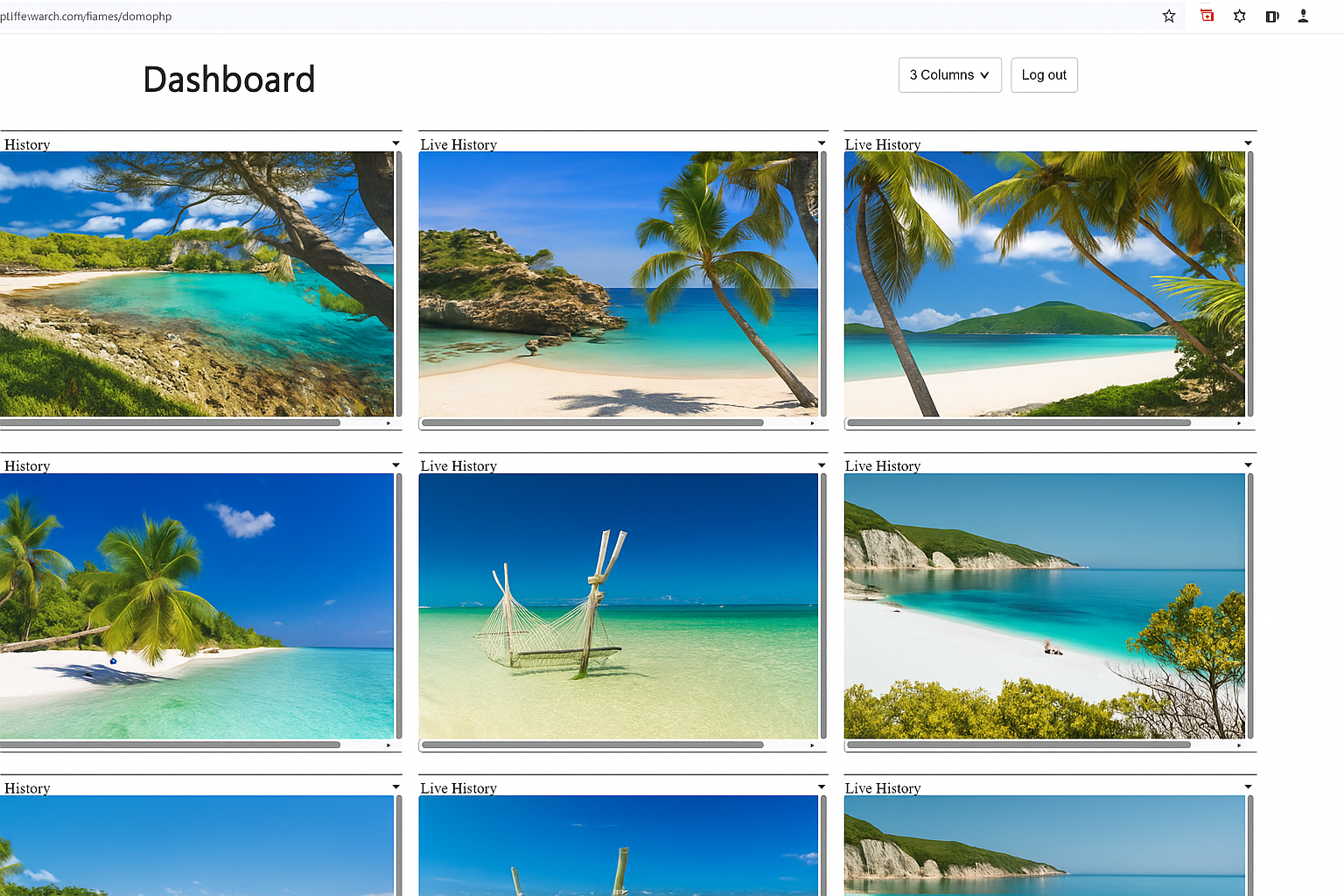
Illustrative grid view showing multiple company-controlled PCs. Any real monitoring use must comply with applicable laws, contracts and internal policies.
If you are rolling out screen visibility across company PCs, the most common IT question is:
“Will it use a lot of bandwidth and slow down computers?”
That depends massively on how the tool works. Many products offer a continuous video stream (high frame rate, constant encoding). That can consume significantly more bandwidth and can add noticeable load on endpoints and networks—especially at scale or on weaker uplinks.
Wolfeye works differently: in Live Mode the monitored PC sends a fresh screenshot about every 3 seconds to the server so the dashboard can display the current screen. The previous live screenshot is replaced by the new one (and without optional history enabled, there is no permanent storage of a continuous timeline). Screenshot history is optional and separate from the live view.
This approach is why Wolfeye is typically lightweight on the PC and predictable for bandwidth planning—especially compared to full video streaming tools and “forensic suite” tools that collect large volumes of data.
Important disclaimer (no legal advice): Whether and how you may use monitoring software depends on your country, contracts, policies, and the specific purpose (for example training supervision, QA, or security). In many jurisdictions you must inform users and/or obtain consent. This article is for technical information only. Before deploying any monitoring software, obtain independent legal advice in all relevant jurisdictions and implement appropriate internal policies and access controls.
Wolfeye bandwidth in one line
If a live screenshot is about ~400 KB and updates every 3 seconds, that is roughly:
~1.1 Mbps per monitored PC (continuous live updates).
Note: screenshot size can vary by resolution and screen content (static documents vs fast-changing UIs). Always validate with a short pilot in your environment.
1) Why screenshot-based monitoring is lighter than video streaming
To understand bandwidth and performance, compare the mechanics:
1.1 Screenshot updates (Wolfeye)
- A monitored PC captures a screenshot at a fixed interval (about every 3 seconds in Live Mode).
- That screenshot is sent to the server over HTTPS so it can be shown in the dashboard.
- Because this is not a continuous video stream, the endpoint avoids constant high-FPS video encoding.
- Result: typically lower CPU load and lower bandwidth than streaming solutions, with very predictable traffic patterns.
1.2 Continuous video stream tools
- Often run at 10–30 frames per second (or more) depending on settings.
- Require constant encoding, transport and decoding—more work on the endpoint and more network load.
- At scale, this can create real bottlenecks on uplinks (especially remote/home office) and can increase endpoint resource usage.
1.3 “Forensic suites” that collect everything
Some tools go beyond screen viewing and continuously collect large amounts of telemetry (e.g., detailed logs, browser data, file events, sometimes even content-level captures). That can significantly increase endpoint workload and network traffic. It can also create additional governance obligations. If your goal is simply live visibility, screenshot-based monitoring can be a far lighter approach.
Example: multiple company PCs visible side by side in a live grid view. Technical illustration only. Any real monitoring use must comply with applicable laws, contracts and internal policies.
2) The math: what “~400 KB every 3 seconds” means
Because Wolfeye is screenshot-based, you can estimate bandwidth with simple math.
2.1 Approximate bandwidth per monitored PC (upload)
- Screenshot size: ~400 KB (example value; can vary)
- Interval: 3 seconds
- Rate: 400 KB / 3 s ≈ 133 KB/s ≈ ~1.1 Mbps
That is the “always-on” live update traffic from the monitored PC to the server when Live Mode is active.
2.2 Quick sizing examples (continuous live updates)
- 10 PCs: ~11 Mbps total upload (site or remote uplinks)
- 50 PCs: ~55 Mbps total upload
- 200 PCs: ~220 Mbps total upload
Reality check: most SMB rollouts don’t run at a single “infinite peak” all day. Still, these numbers are very useful for planning uplinks and for deciding whether to start with a pilot and phased rollout.
2.3 What about the supervisor’s dashboard download?
The supervisor/dashboard must download the images it displays. The more PCs you show at once (grid tiles) and the more you open in large view (zoom), the higher the viewer download can be. This is why operational workflows matter:
- Use the grid as radar for quick context
- Use large view (zoom) only when investigating
- Limit simultaneous viewers to roles that truly need it
Best practice: run a pilot and measure both the uplink (monitored PCs) and the downlink (supervisor viewing PC) during a busy period.
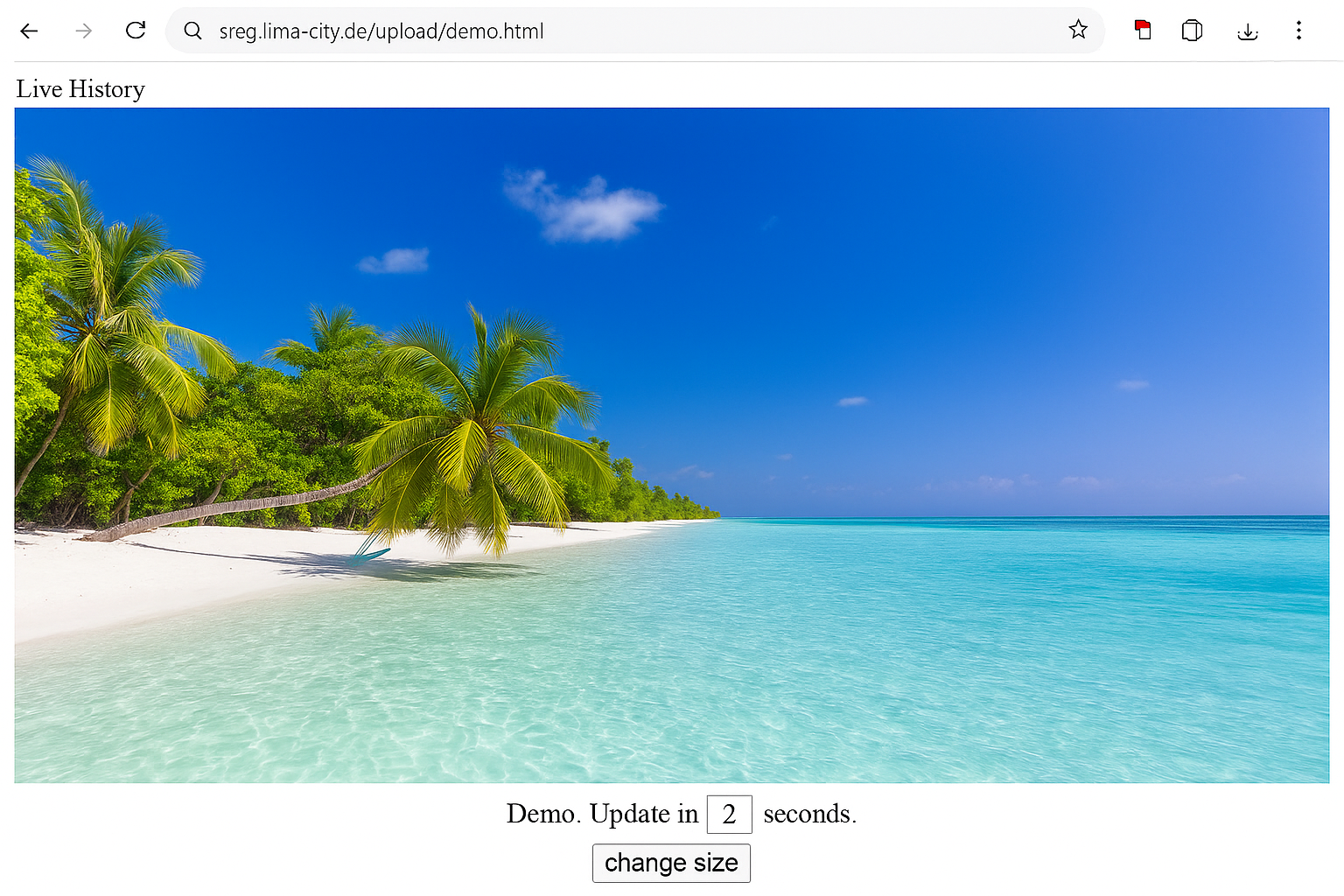
Example: one company PC opened in a larger live view. Technical illustration only.
3) Why Wolfeye usually does not slow down PCs
When people say “monitoring slowed down our PCs,” it often comes from continuous video streaming or heavy “collect-everything” software. Those approaches can add extra CPU work (encoding, compression, constant capture) and can compete with business apps for resources.
Wolfeye’s screenshot approach is typically lightweight because:
- It does not require a high frame-rate video encode pipeline.
- It transfers periodic screenshots rather than a continuous stream.
- Live view replaces the previous screenshot (without optional history enabled, it does not inherently build a huge local archive).
Practical takeaway: if your core requirement is “see what is on screens” for supervision, QA, support, or incident response, screenshot-based monitoring is often the best balance between visibility and low overhead.
4) Pilot and measurement: how to confirm bandwidth in your environment
Even with predictable math, you should validate with a short pilot. It takes less time than debating numbers and prevents rollout surprises.
4.1 Define your peak scenario
- How many PCs are monitored (office vs remote)?
- How many supervisors view the dashboard at the same time?
- How many grid tiles do they typically keep visible?
- How often do they open zoom view?
4.2 Measure with simple tools
- Supervisor PC: Windows Task Manager → Performance (network), or Resource Monitor → Network
- Network edge: firewall/router WAN graphs (most reliable for MSPs)
- Remote reality: test with real home office uplinks during busy hours
4.3 Multiply and add headroom
Once you have measured real values (average and spikes), scale them to your rollout size and add 30–50% headroom for growth and bursty peaks.
5) SMB & MSP rollout checklist (bandwidth + stability)
- Start small: 3–5 PCs pilot first, then expand.
- Check uplinks: office upload and home office upload are frequent bottlenecks.
- Use workflows: grid for radar, zoom for investigation.
- Limit viewers: avoid unnecessary concurrent viewing.
- Document “normal”: what is the standard supervisor usage pattern?
- Plan governance: define purpose (e.g., training supervision), access roles, and confirm legal review happened.
6) Video demo: Stealth Monitoring for Remote Teams (Non-disruptive Live View)
This video shows a technical demo of viewing home office screens similarly to office screens. In many teams, “stealth” is best interpreted as non-disruptive (background, view-only, lightweight)—not “secret.”
Disclaimer (no legal advice): use monitoring software only if it is lawful in your country and for your specific use case (for example training supervision, QA, or security). Where required, inform users and obtain consent. Always obtain independent legal advice before deployment.
Video: “Stealth Monitoring for Remote Teams — See Home Office Screens Like in the Office”.
FAQ – Bandwidth & Performance
No. Wolfeye is screenshot-based (about every 3 seconds in Live Mode), which is typically far lighter than continuous video streaming tools.
If a screenshot is ~400 KB and updates every 3 seconds, that is roughly ~1.1 Mbps per monitored PC (continuous). Real screenshot sizes can vary—confirm with a pilot.
Video streaming often needs constant high-FPS capture and encoding. That can increase CPU load and creates higher, continuous network traffic.
Tools that collect extensive telemetry and data can generate much more traffic and endpoint load. If you only need live visibility, a screenshot-based approach is often lighter.
Often yes, but it depends on country and use case. This article is not legal advice—always obtain independent legal advice and follow applicable laws and policies.
Conclusion
Wolfeye’s screenshot approach makes bandwidth planning predictable: a live screenshot about every 3 seconds is typically far lighter than continuous video streaming, and it avoids constant heavy endpoint encoding. Use the simple math for first sizing, then confirm with a short pilot and scale with headroom.
Compliance reminder (no legal advice): legality and transparency requirements vary by country and use case. Always obtain independent legal advice and implement internal policies, purpose limitation, and access controls before deploying monitoring software.
Want a quick Wolfeye sizing demo for your environment?
Book Demo & Start Trial
Wolfeye is monitoring software. Any use must comply with the laws and regulations that apply in all relevant countries, your industry and your specific use case (for example, training supervision, quality assurance or security). In many jurisdictions, permissibility depends on factors such as prior information of users, explicit consent, contractual terms, works council rules and data protection requirements. This article and the embedded video are for general technical and organisational information only and do not constitute legal advice or a guarantee of legal admissibility.
Before using any monitoring software such as Wolfeye, always obtain independent legal advice in all relevant countries about whether and how you may monitor company-controlled PCs (for example for training supervision, quality assurance or security), and under which conditions users must be informed or give consent.